

BLOG
19 October 26
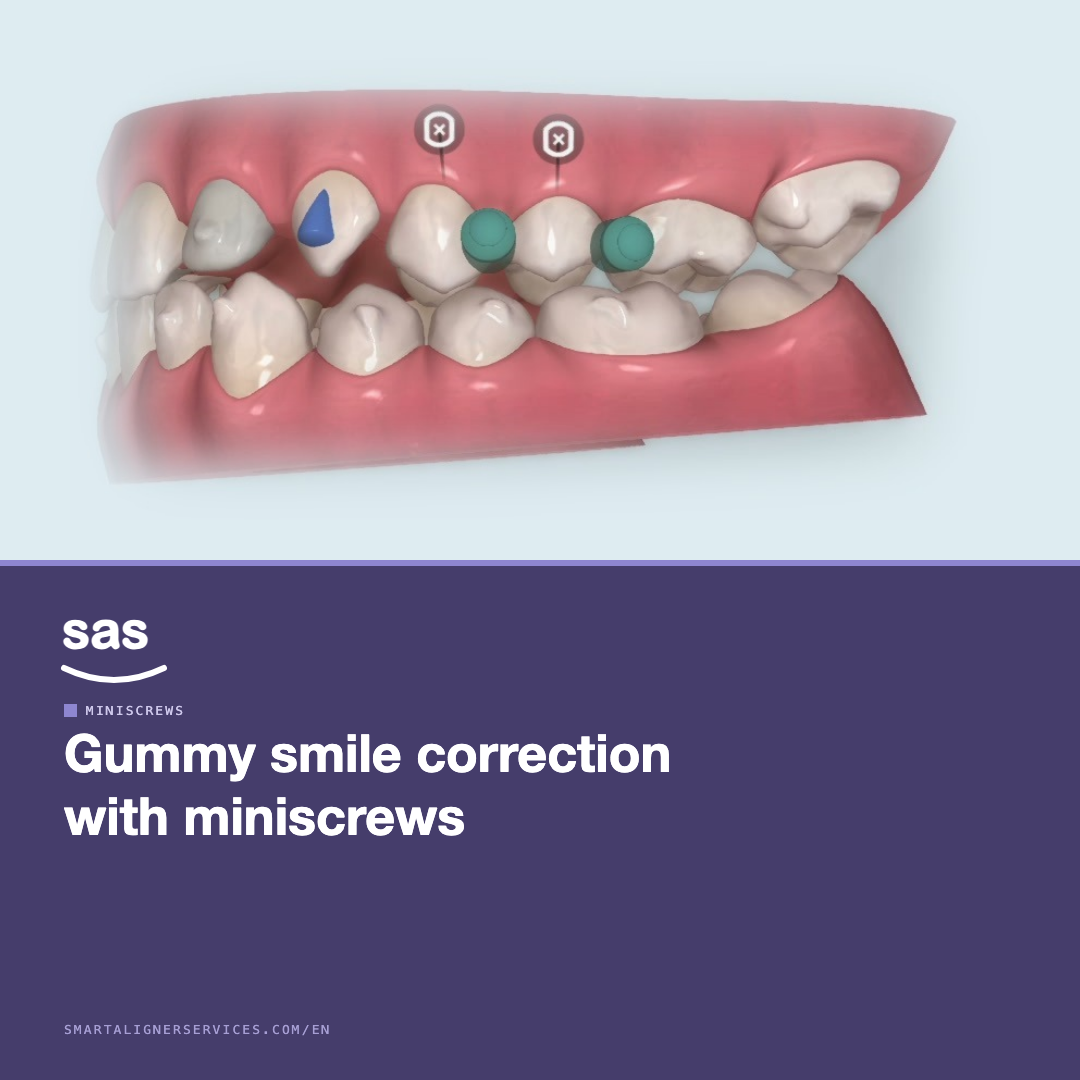
Correcting a gummy smile with miniscrews and clear aligners
Correcting a gummy smile by intruding the maxilla with miniscrews and aligners: 0.1 mm per aligner, alternating, coordinated torque and elastics.
Saber más
12 October 26
Clear aligner treatment planning: how it works
How clear aligner treatment planning works, from records and diagnosis to staging, attachments and refinements, and what to check before approving.
Saber más
5 October 26
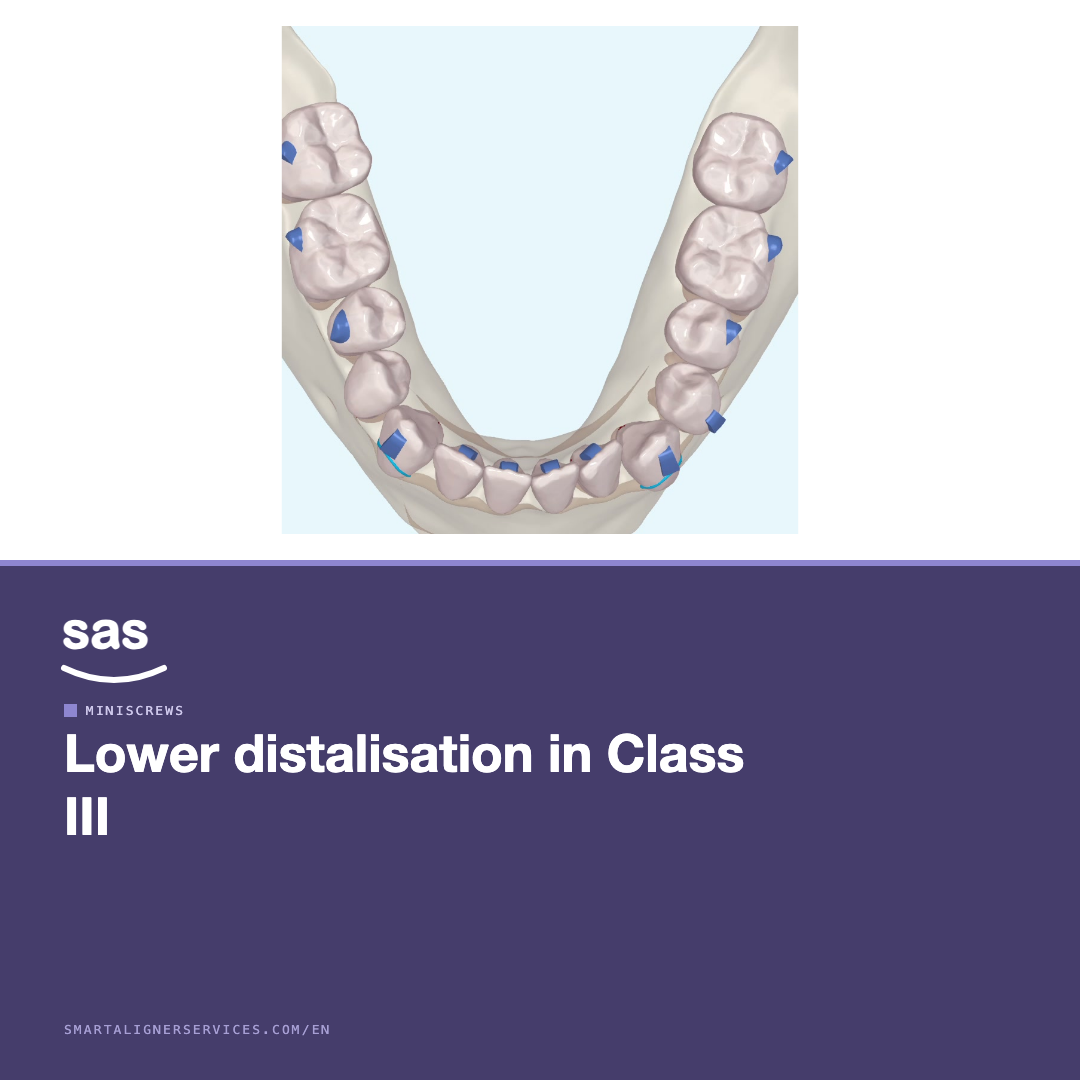
Lower distalisation with miniscrews in Class III
Many Class III cases come with maxillary hypoplasia, and that hypoplasia is rarely only transverse: it almost always has a sagittal component too. So in these cases the order of movements matters as much as the movements themselves. First we sort the maxilla, and only then do we distalise the lower arch, leaning on skeletal […]
Saber más

29 September 26
Molar intrusion with miniscrews to close an open bite
With an open bite there comes a point where you may have tried every sequence going, posterior intrusion, anterior extrusion, bite ramps, and still not closed it. When the aligner on its own cannot deliver the posterior intrusion the case needs, the answer is not to push harder with more of the same, but to […]
Saber más
21 September 26
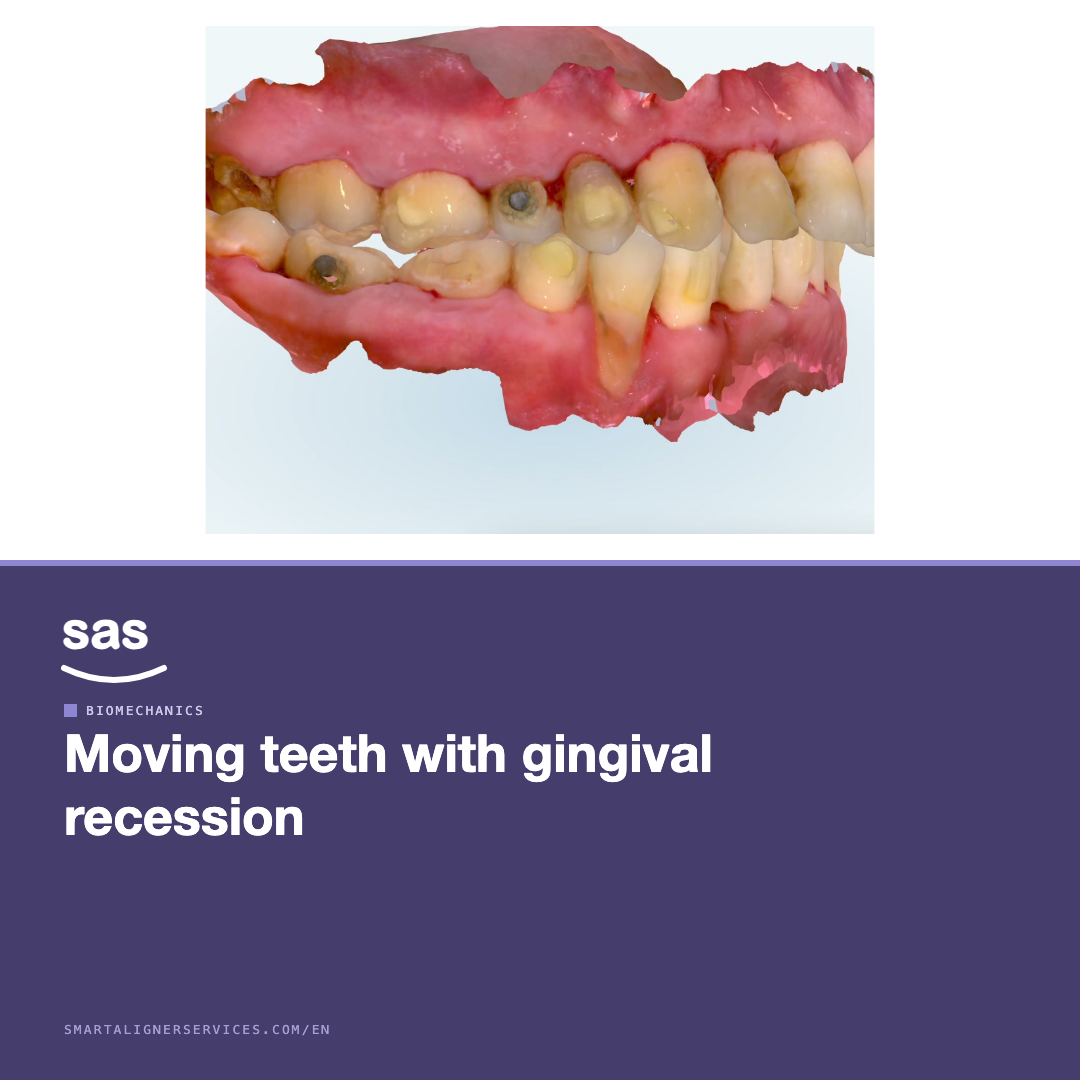
Moving teeth with gingival recession: sequence before force
In a tooth with marked gingival recession, the risk isn’t so much in the movement you want to make as in when you decide to make it. Moving it early, before you have anchorage, is the quickest way to lose control exactly where the tissue is most delicate. The key, almost always, is the sequence. […]
Saber más
14 September 26
Attachments in clear aligners: what they do and which types matter
Clear aligners move teeth with light, continuous forces, but some movements are hard for a smooth plastic tray to achieve on its own. That is where attachments come in: small tooth-coloured composite bumps bonded to the tooth that give the aligner a defined point to push or pull against. Without them, certain movements are slow […]
Saber más
7 September 26
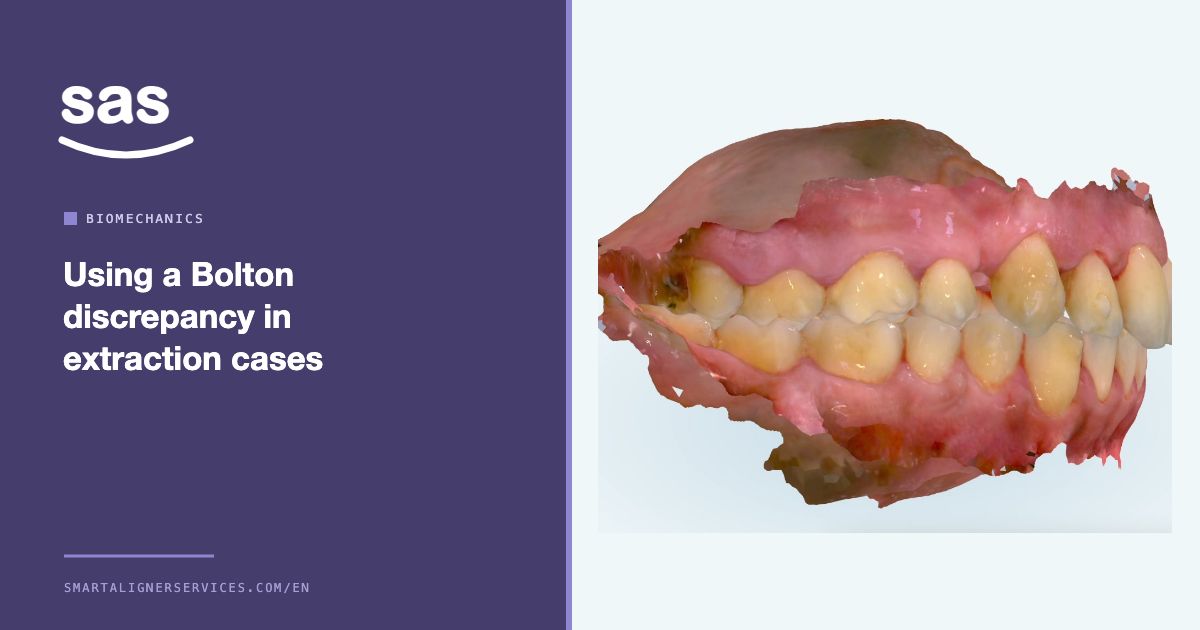
Using a Bolton discrepancy to simplify extraction cases
In extraction cases, the hard part usually isn’t opening the space, it’s closing it well. And the movement that complicates most is mesialising the posterior segments to bring the canines into Class I. Before committing to that movement, it’s worth reading a figure that often rewrites the whole mechanics: the Bolton discrepancy. The Bolton discrepancy, […]
Saber más
12 August 26
Clear aligner training for orthodontists: what actually moves the needle
Most of us learned aligners the hard way: a weekend intro, a stack of tutorials, and then a lot of trial and error on real patients. It works, eventually, but it is slow and it costs refinements. The gap is rarely the software or the brand. It is the biomechanics, and biomechanics is exactly what […]
Saber más
3 August 26
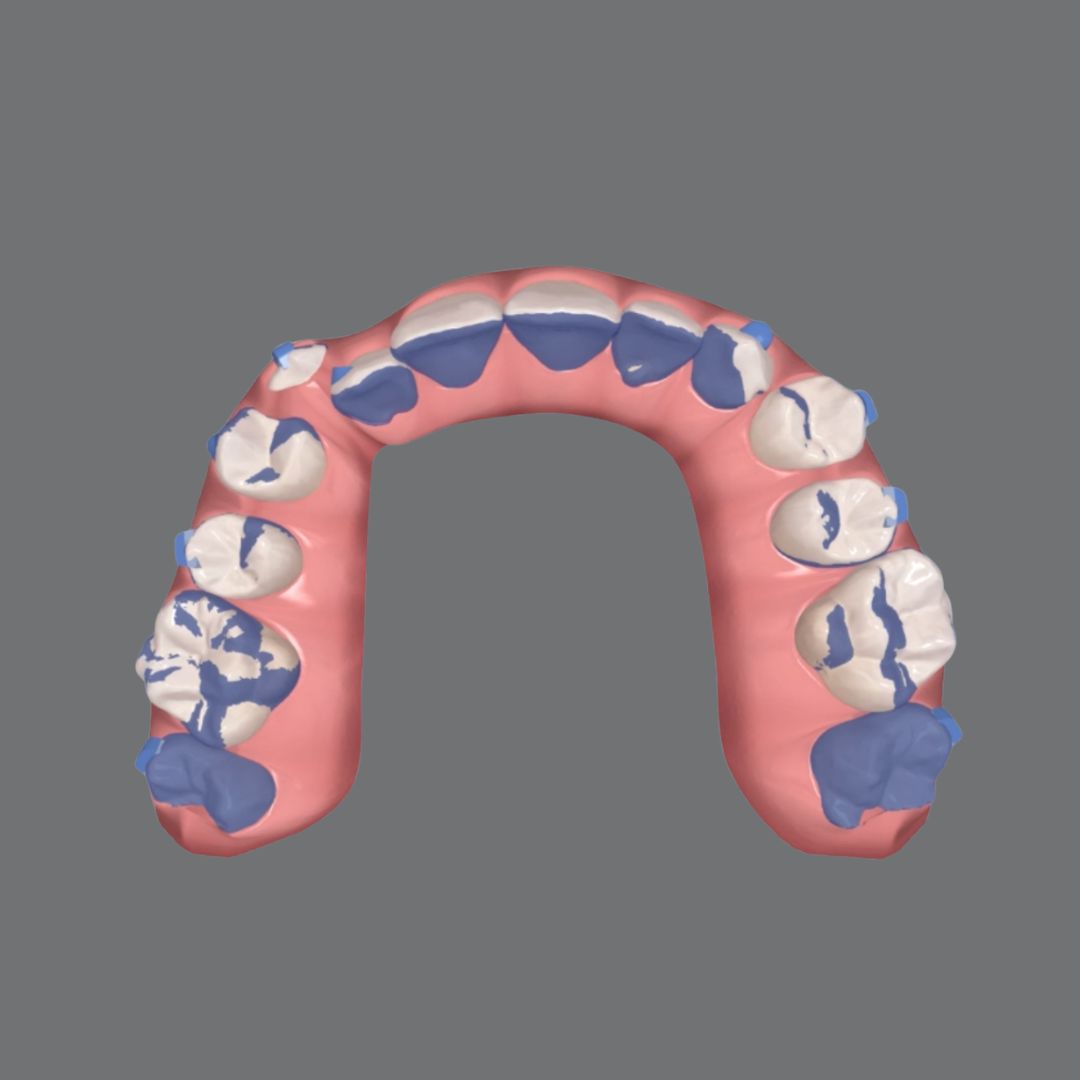
Third molar anchorage for arch development, step by step
In severe crowding, the first decision isn’t how to align, it’s where the space is going to come from. Most of the time we move between two options that both carry a cost: expanding, which loses arch depth, or compressing, which proclines the incisors beyond their biological limits. There’s a third route that many cases […]
Saber más
27 July 26
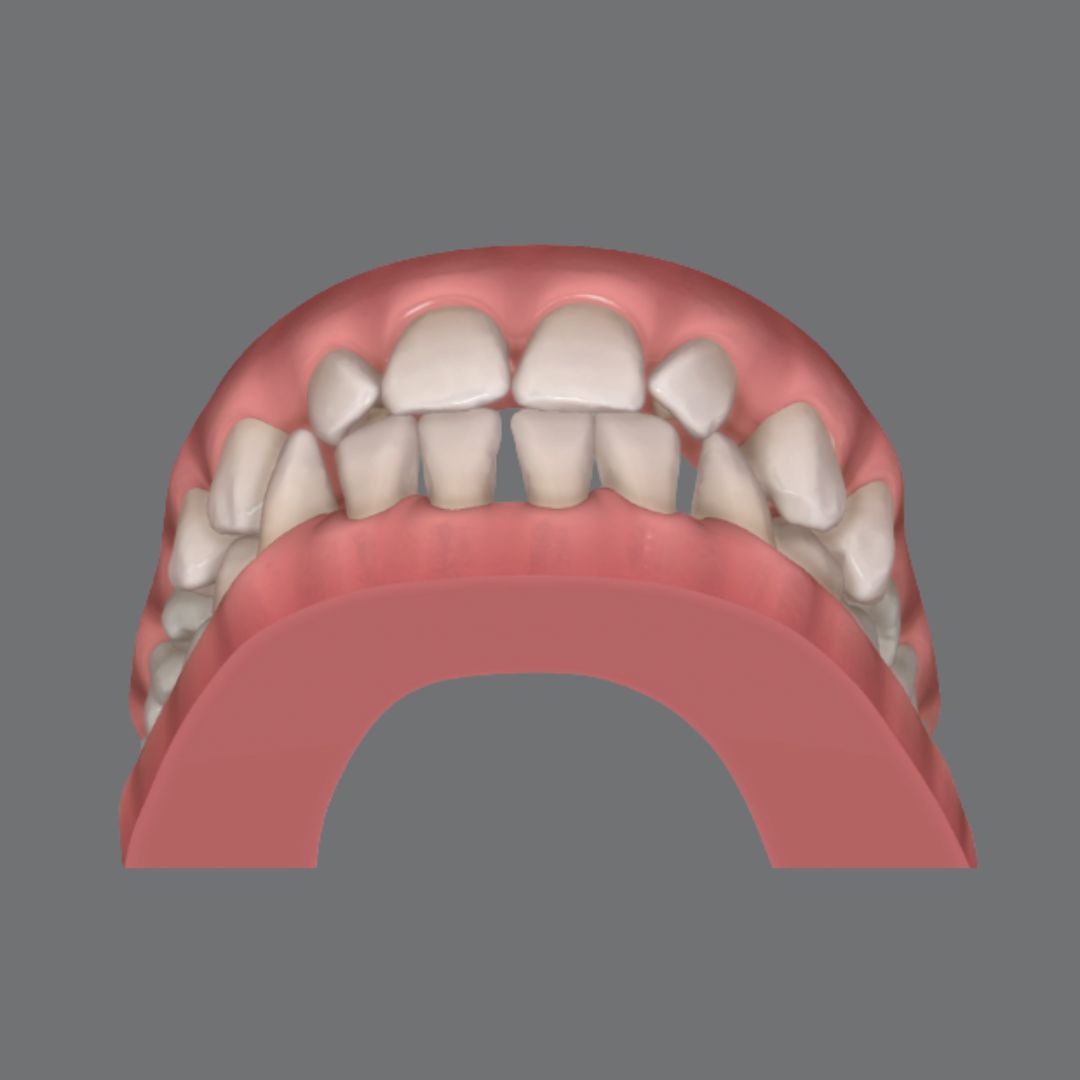
Closing diastemas with aligners without losing incisor torque
Closing diastemas with aligners has a trap that shows up almost every time at the same point: once the incisors start retracting, the torque gets lost. The result is a retrusion that closes the space but leaves the incisors tipped palatally, with everything that means for aesthetics and long-term stability. Avoiding it doesn’t take extraordinary […]
Saber más
21 July 26
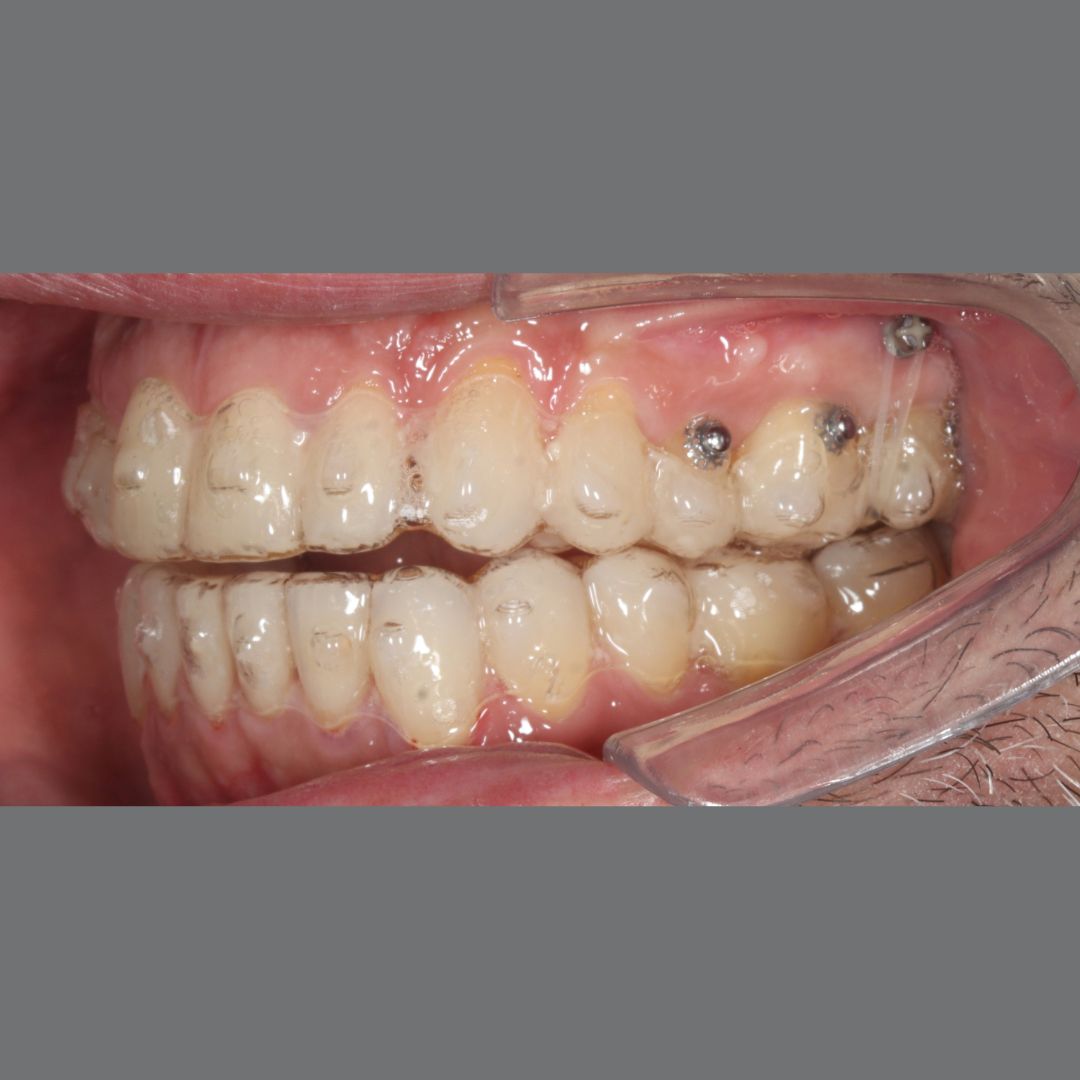
Closing extraction spaces with reciprocal anchorage, step by step
Closing extraction spaces with aligners is one of the scenarios where improvisation shows the most, and where the lack of a clear protocol shows even more. In Class II or Class III cases requiring full correction, where a direct staging would be complex, the key is sequencing the movement with reciprocal-anchorage logic that lets you […]
Saber más
13 July 26
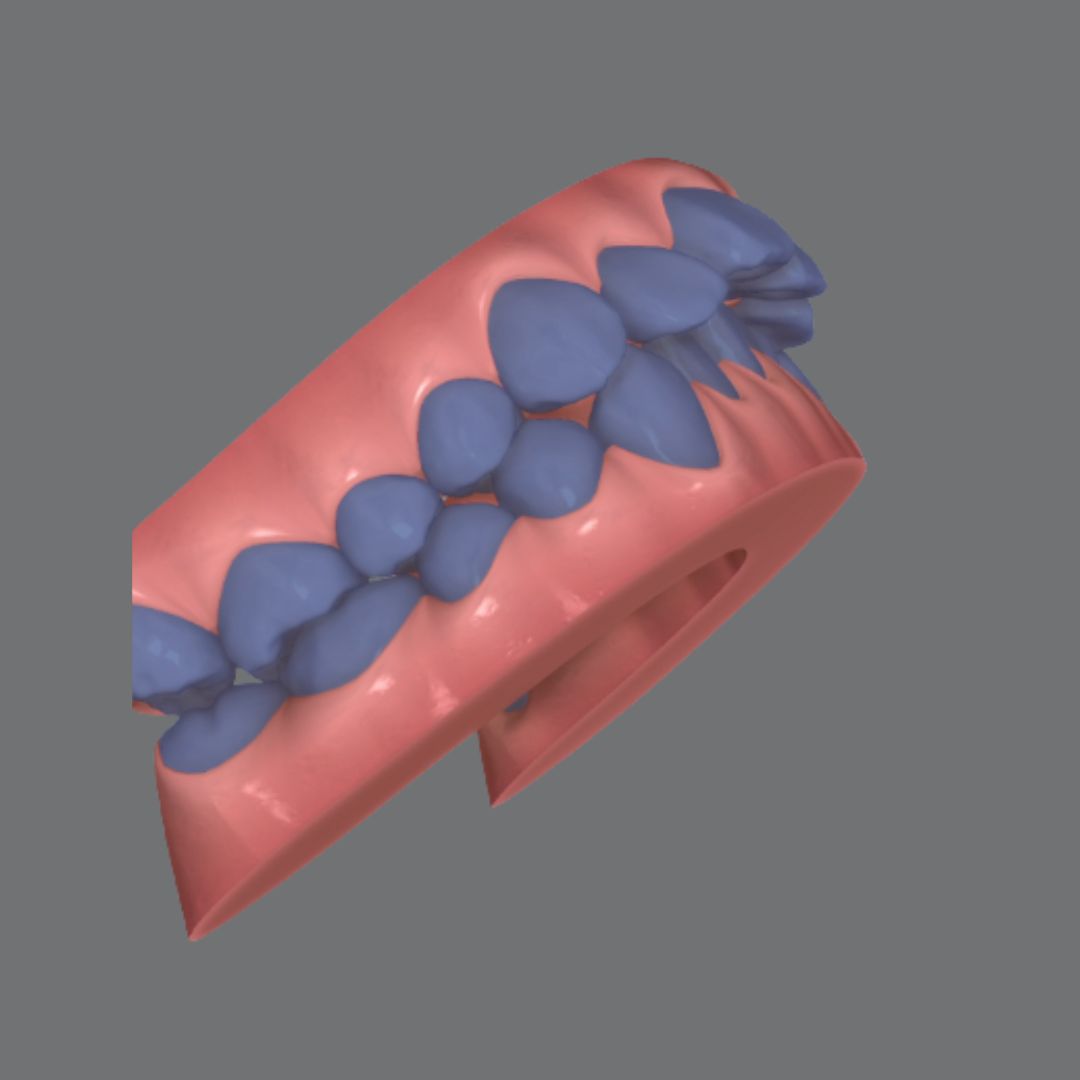
The sandwich technique: solving severe crowding without stripping, extractions or TADs
When a severe crowding case comes in, the first options that come to mind are almost always the same: stripping, extractions or TADs. In some patients, whether for periodontal reasons, patient preference, or both, none of those is viable or desirable. The sandwich technique is the alternative when the crowding has to be resolved without […]
Saber más


