

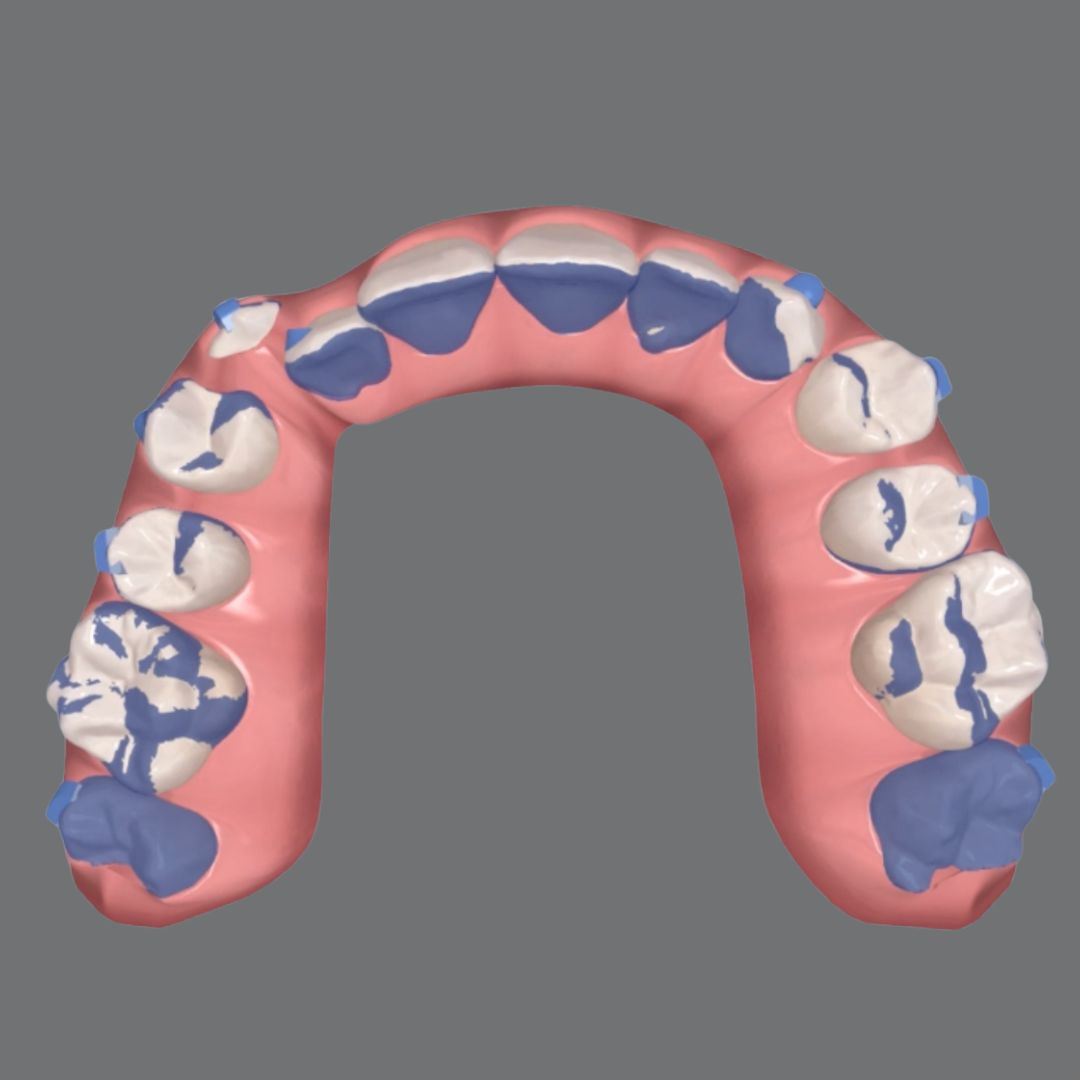
Molar flaring after expansion: turn it into a resource
After a palatal expansion, buccal tipping of the molars is almost inevitable. It does not matter which device you used: when you gain several millimetres of transverse width by pushing on the molars, those teeth end up with negative torque that has to be corrected. The question is not whether it happens, but what you do with it.
With fixed appliances, correcting that tipping calls for elastics and a relatively complex mechanic. With aligners, the same problem can become the starting point of a very favourable sequence, if you know how to use it. This is one of the cases where the SAS Method logic pays off: you plan each phase to set up the next one.
The starting point: negative torque you can use
Take a patient around ten years old with a bilateral crossbite and a constricted maxilla. After an expansion that gains roughly 10 mm of width, the typical picture is this: the molars are tipped buccally, the lower incisors carry negative torque, and the system needs to reorganise before it can move forward.
The key is to see that molar tipping is not only a problem to fix. It is also a biomechanical opportunity.
Compress the first molars to normalise them
The first move is to compress the first molars and bring them back into a correct relationship with the basal bone, keeping the second molars still as anchorage.
That compression has a very useful side effect: by normalising the first molars you open space in the canine area and create an environment that favours incisor proclination. The movements work in synergy, and that synergy is exactly what makes the mechanic efficient. With fixed appliances the same effect would need transverse elastics and more laborious control; with aligners the force system is more direct and the result comes in a few months.
Incisor proclination as a logical consequence
Once the molars are normalising, the proclination of the lower incisors happens as a biomechanical consequence of the previous movement, not as a separate movement you have to force.
That is the principle behind this kind of planning: you do not work each movement in isolation, you design the sequence so that every phase creates the conditions the next one needs. Compressing the molars opens the space. That space allows the proclination. The proclination, in turn, helps to accommodate the canines, which in these cases usually need room.
A result that with fixed appliances would take much longer
What makes this protocol especially valuable in growing patients is how fast the result arrives.
In four or five months of active treatment, with a well sequenced mechanic and without transverse elastics, you can go from tipped molars and negative incisor torque to a correct position of all those teeth relative to the basal bone. And you do it while creating space for the canines, which in these patients is often one of the most relevant secondary goals.
Tipping is not a problem: it is a resource
The difference between a plan that treats post-expansion flaring as a problem to fix and one that takes it as the starting point of the mechanic is, in practice, the difference between a long, complex treatment and an efficient, predictable one.
Once you understand that compressing the tipped molars generates favourable synergies for the rest of the arch, that tipping stops being an unwanted side effect and becomes the engine of the first phase.
Want to learn to spot and use synergies like this in your own cases? Explore how the teaches advanced aligner biomechanics at Smart Aligner Services.
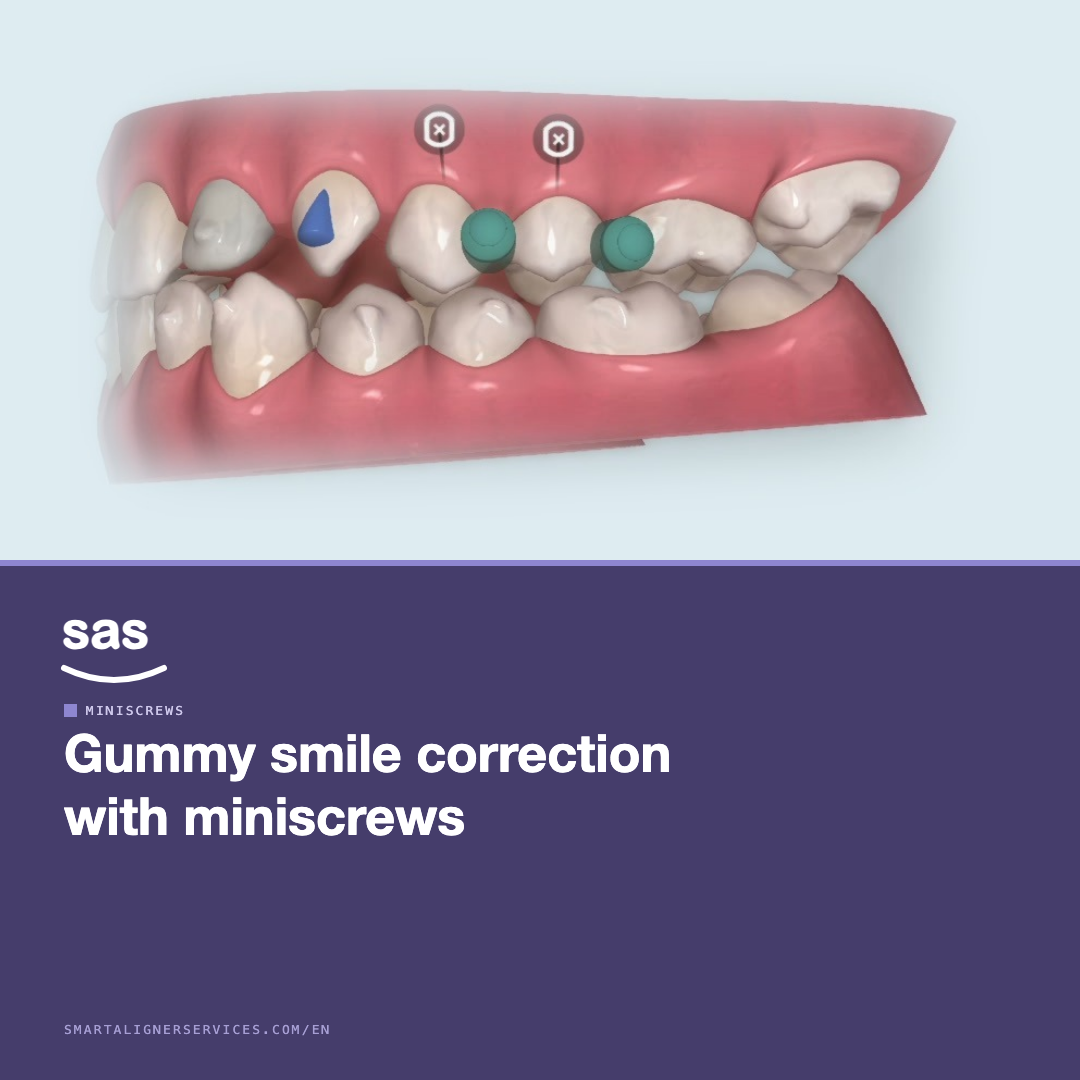
Correcting a gummy smile with miniscrews and clear aligners
Clear aligner treatment planning: how it works
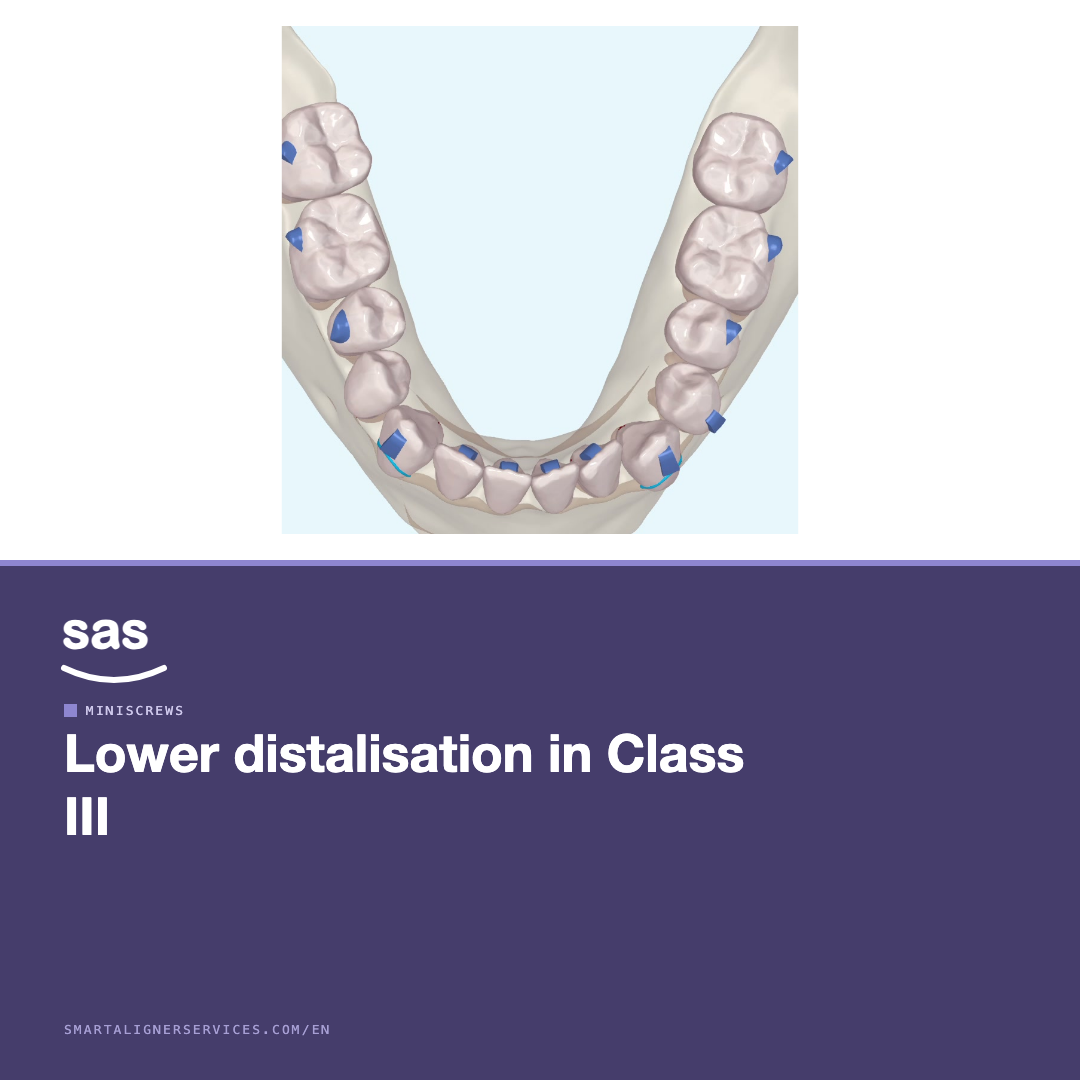
Lower distalisation with miniscrews in Class III


