

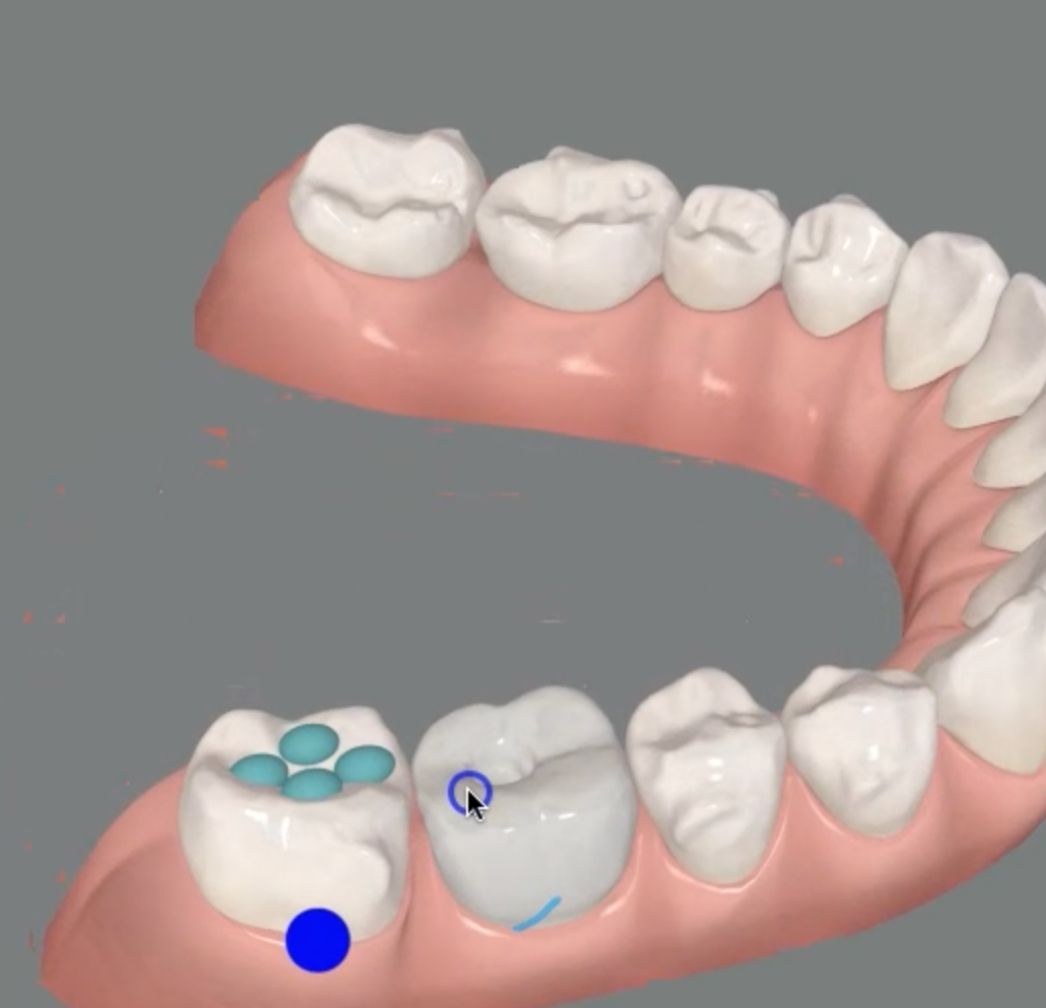
How to use Invisalign Occlusal Pads
In one of the latest system updates, Align Technology has incorporated occlusal pads into its ClinCheck system for our Invisalign clear aligner treatment planning. However, as orthodontists, how can we make the most of them?
What Occlusal Pads are and what can we expect from them
Occlusal pads are a solid, filled volume on the aligner whose thickness is planned by the algorithm, allowing us to prevent occlusal contact and generate disclusion while the patient is wearing them.
This last point introduces an important nuance when using them in our treatments, because unlike a resin build-up, they only act when the aligner is in place.
However, they are a useful resource to slightly favor certain mechanics in vertical movements.
Example of a typical use case and its limitations
Let us consider a Class II patient with supraeruption of a molar for which we have planned slight intrusion of that tooth in the final aligners. Occlusal pads can help (through the disclusion they generate) that mechanic express more effectively, yes, but they do not replace poor biomechanics.
To intrude a molar in a real way, we need real anchorage in the form of an extrusion attachment on an adjacent tooth, a miniscrew, or a physical build-up. Without such anchorage, intrusion will be minimal or even nonexistent, regardless of how well we planned it in our ClinCheck.
It is essential to emphasize their limitations in order to use them correctly: they depend entirely on the amount of time the patient wears the aligner, which even in the best and most optimal cases is still not 24 hours, unlike a permanent build-up.
Conclusion
Occlusal pads:
-
Generate disclusion
-
Favor certain mechanics
-
Help with occlusal control
But they are just another tool within the system, not a magic solution. If we integrate them with sound judgment and understand their limitations, we will avoid false expectations both for ourselves and for the patient.
Learn to plan mechanics with your own clinical criteria
If you need further guidance in planning your cases and understanding when you should — and should not — apply tools such as occlusal bite ramps, and how to combine aligners, attachments, and skeletal anchorage to achieve the movements you have planned, explore our advanced aligner planning courses and learn to make clinical decisions based on biomechanics.
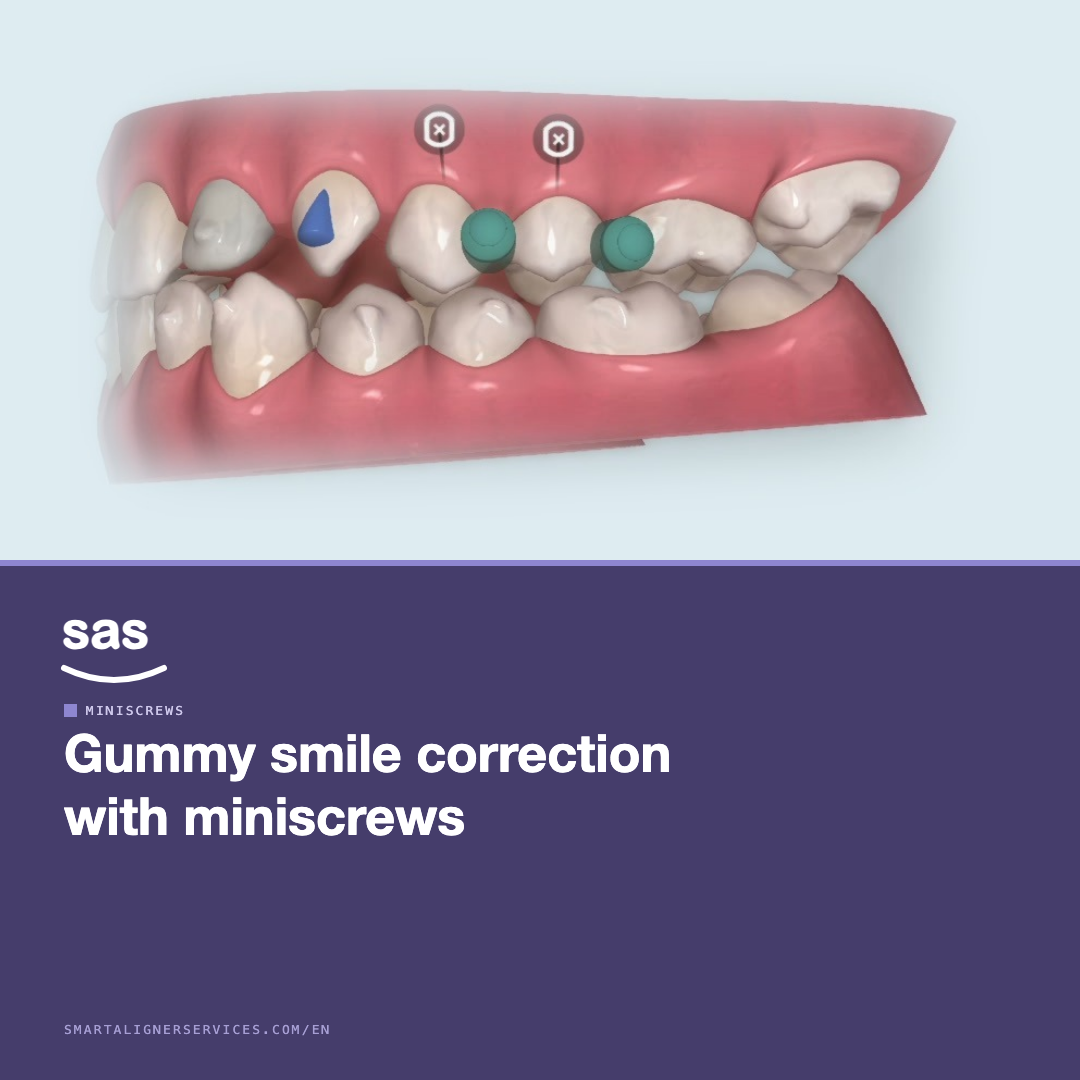
Correcting a gummy smile with miniscrews and clear aligners
Clear aligner treatment planning: how it works
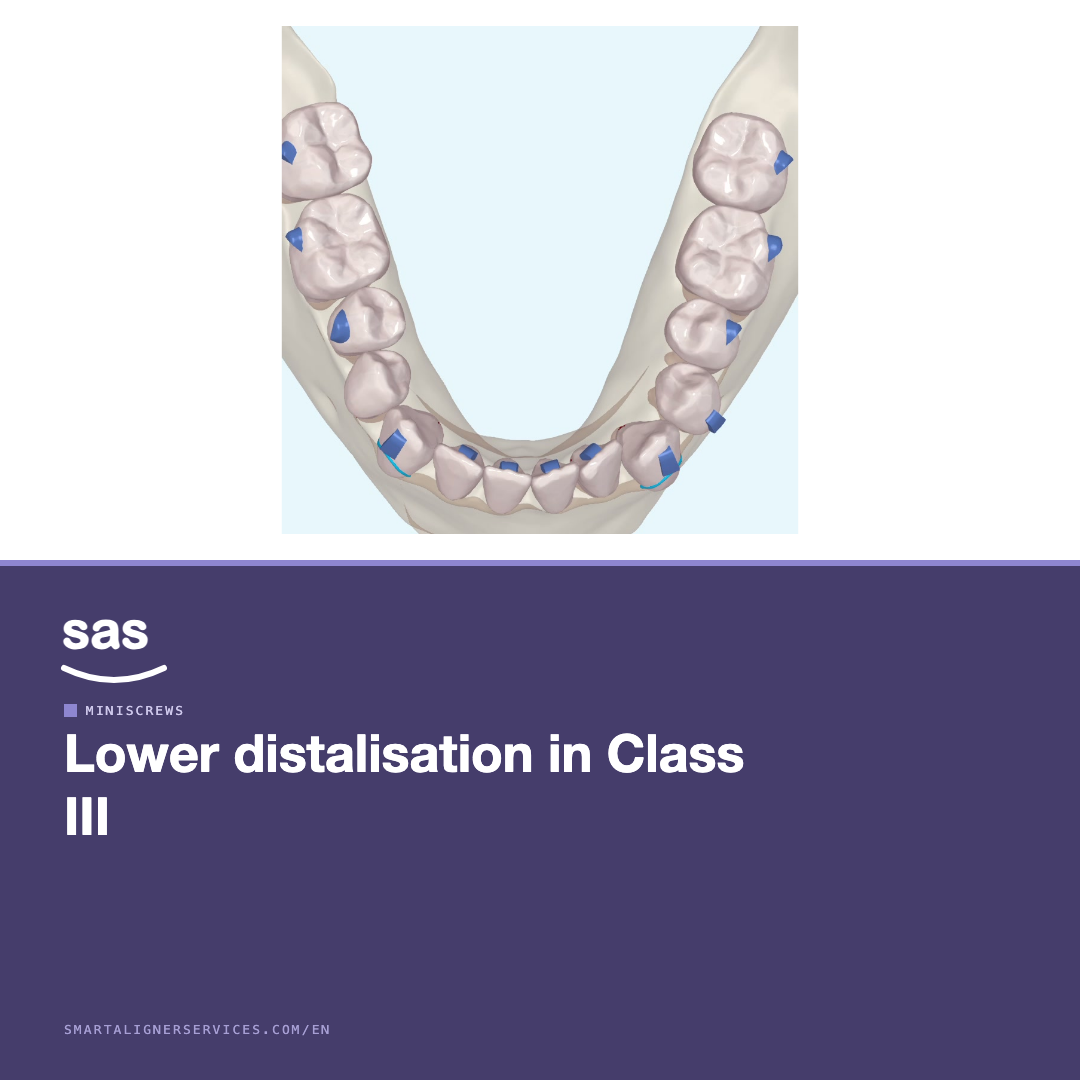
Lower distalisation with miniscrews in Class III


