Arch expansion with limited clear aligner packages
Expanding a dental arch when working with a limited aligner package, for example 20 aligners, can become a complex challenge if movement sequencing is not fully controlled throughout treatment planning.
The key is understanding how tooth movements interact with each other and how each treatment phase influences the next. When biomechanics are properly sequenced, every movement prepares the system for what follows.
True arch expansion is not simply about separating teeth.
It means expanding while maintaining arch depth, controlling anterior proclination, preventing unwanted flaring of lateral incisors, and preserving torque and functional stability.
It may sound simple. Clinically, it is not.
Let us look at a practical example.
Correct movement sequencing: a clinical example
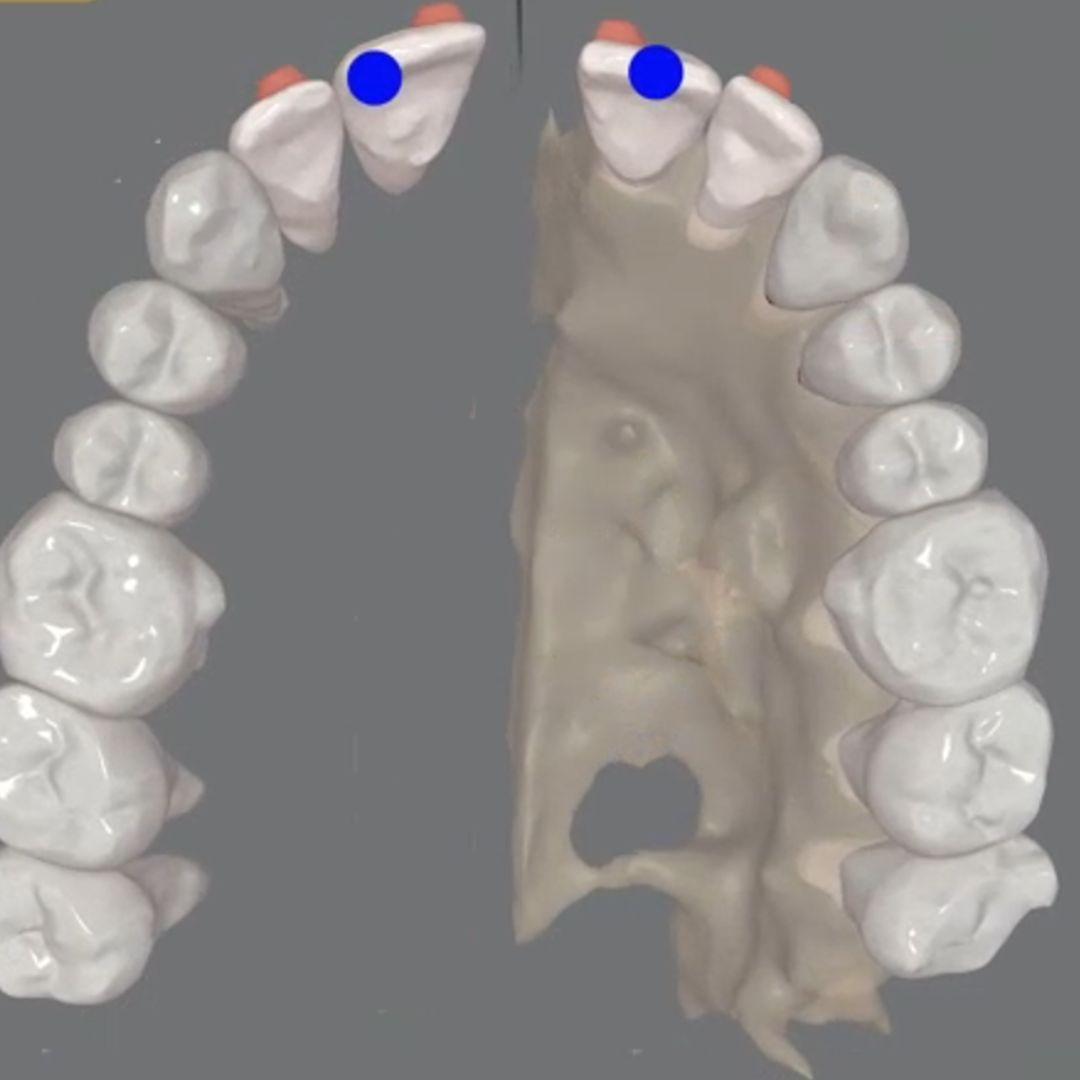
Imagine a case where we need to correct mild anterior torque deficiency while simultaneously expanding the posterior segments.
With limited aligners, performing all movements at once is neither efficient nor predictable. The solution lies in careful biomechanical sequencing.
Phase 1: strategic space creation and incisor control
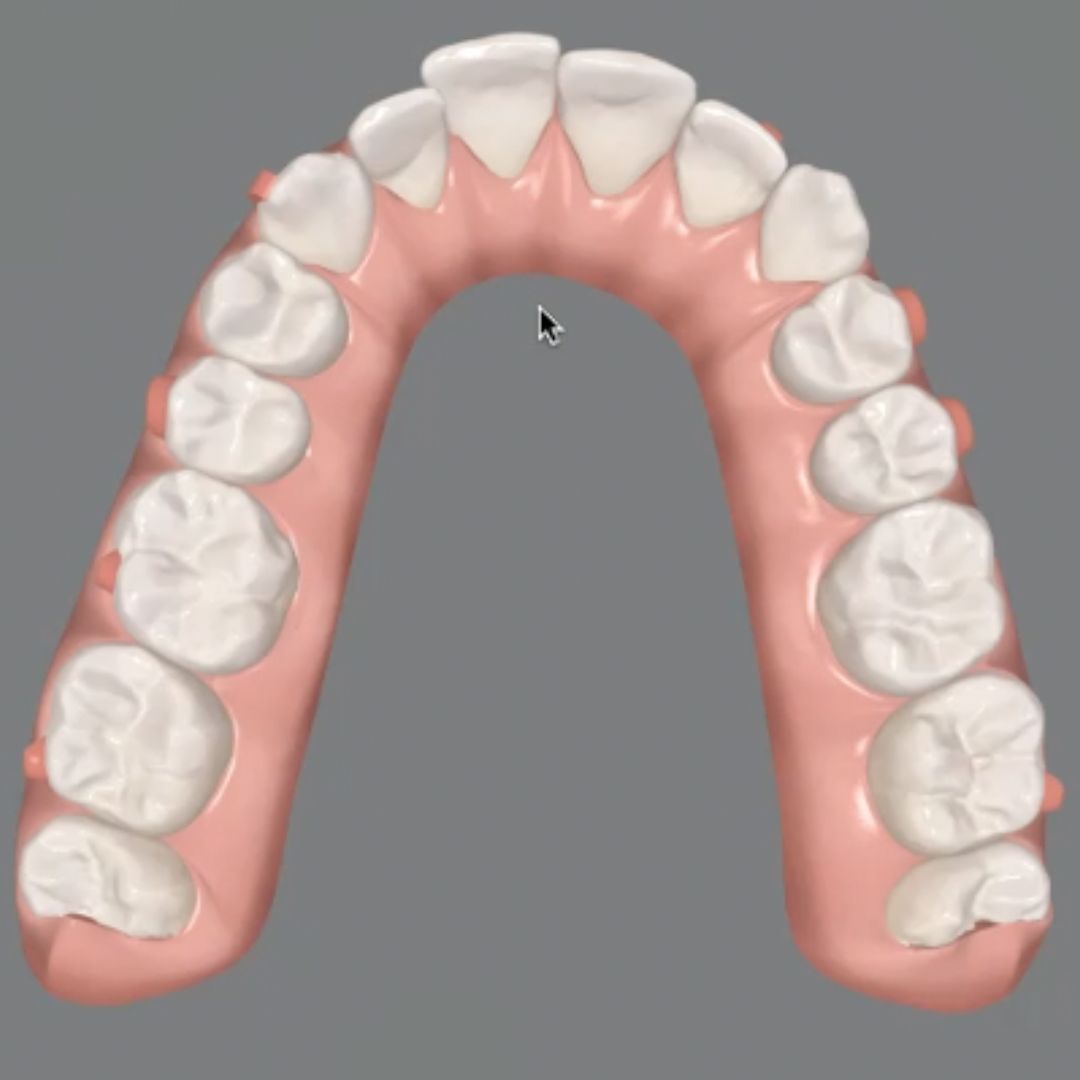
First, controlled spaces are generated while managing incisor proclination. This allows maintenance of arch depth and prevents deformation when posterior expansion begins.
Clinically, this can be understood as a controlled push and retract dynamic, where each movement prepares the arch structure for the next phase.
Phase 2: controlled posterior expansion with torque management
Once the system is prepared, posterior expansion begins.
At this stage, collaboration with the CAD designer is essential. Torque control must be preserved in every tooth. Even small adjustments, such as refining aligner angulation or maximizing programmed torque at each stage, can determine whether the final result is stable and predictable or aesthetically compromised.
A practical sequence may include:
-
Controlled incisor proclination combined with space development
-
Maintenance of arch depth
-
Posterior expansion combined with retrusion mechanics
-
Positive torque application to stabilize incisor position
This strategy allows the arch to expand safely without compromising smile harmony or functional balance.
Making limited aligner expansion predictable
When properly sequenced, arch expansion with limited aligners becomes controlled, efficient, and biomechanically reproducible.
The combination of intelligent sequencing, precise torque control, and strategic planning transforms what appears to be a limitation into a structured and predictable clinical process.
Limited packages are not the problem. Lack of biomechanical control is.
Master biomechanics with the SAS Method
If you want to design your own aligner treatment plans with confidence and efficiency, mastering biomechanics is essential.
The SAS Method provides a structured system for planning clear aligner treatments that are predictable, efficient, and biomechanically sound, even when working with limited aligner packages.
Learn how to control expansion, torque, and sequencing with precision and turn complex cases into reproducible clinical workflows.
Discover more about the SAS Method and start planning with clarity and control.
Mandibular advancement with clear aligners
How to intrude molars with clear aligners
How to close the interincisal diastema after MARPE