

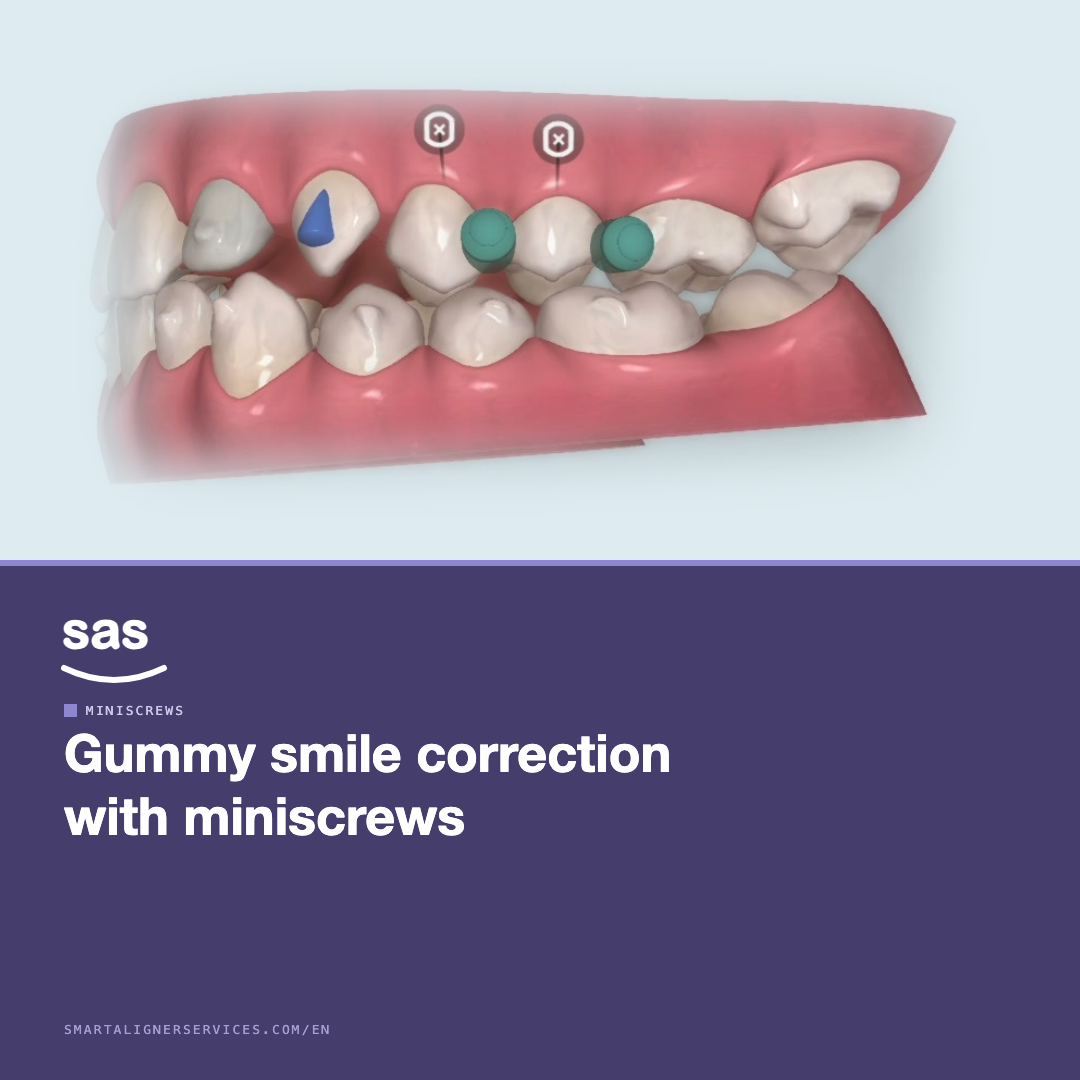
Correcting a gummy smile with miniscrews and clear aligners
When a gummy smile comes from excessive maxillary exposure, the correction is intrusion, and pure intrusion is one of the movements an aligner cannot sustain on its own. With skeletal anchorage it can. In this case, a young patient with both anterior and posterior gingival display, we agreed with her parents to intrude the maxilla using miniscrews, aligners and the patient’s cooperation with elastics.
Diagnosis: find where the excess exposure is
The first step is reading where the extra display comes from. Here the upper left quadrant showed a clear extrusion of the first premolar, second premolar and first molar (24, 25 and 26), a very useful visual reference. On that basis we planned to intrude both upper quadrants: the correction is anterior and posterior, not just the front.
Interradicular miniscrews, as large as possible
We placed interradicular miniscrews, with one practical detail: use the largest size the site allows, because size gives stability. That stable anchorage is what makes a controlled intrusion possible without the rest of the arch paying for it.
Slow, alternating intrusion: 0.1 mm per aligner and tooth
Intrusion is always programmed at 0.1 mm per aligner per tooth, and in an alternating pattern. It is deliberately slow. At the same time it is coordinated with buccal root torque on the second molar, which tends to extrude, and with incisor intrusion using the lateral incisor as anchorage. The movements are planned as one sequence, not as separate pieces.
Elastics to integrated buttons
The patient wears an elastic to integrated buttons on the aligner. Control is good and there is very little tipping, partly because we are compressing the second molar at the same time. The elastic, 1/8 inch and 5 oz, is worn 24 hours a day for as long as possible to support the movement.
Reciprocity and cooperation
There is a lot of reciprocity and biomechanics behind this case, but the patient’s cooperation with the elastics is what finally makes the correction happen. The principle: a gummy smile caused by maxillary excess is solved with intrusion anchored on miniscrews, dosed very slowly and coordinated with torque, not with force.
Want to plan maxillary intrusion anchored on miniscrews with clear aligners? Explore how the SAS Method teaches advanced aligner biomechanics at Smart Aligner Services, peer to peer, from orthodontist to orthodontist.
Clear aligner treatment planning: how it works
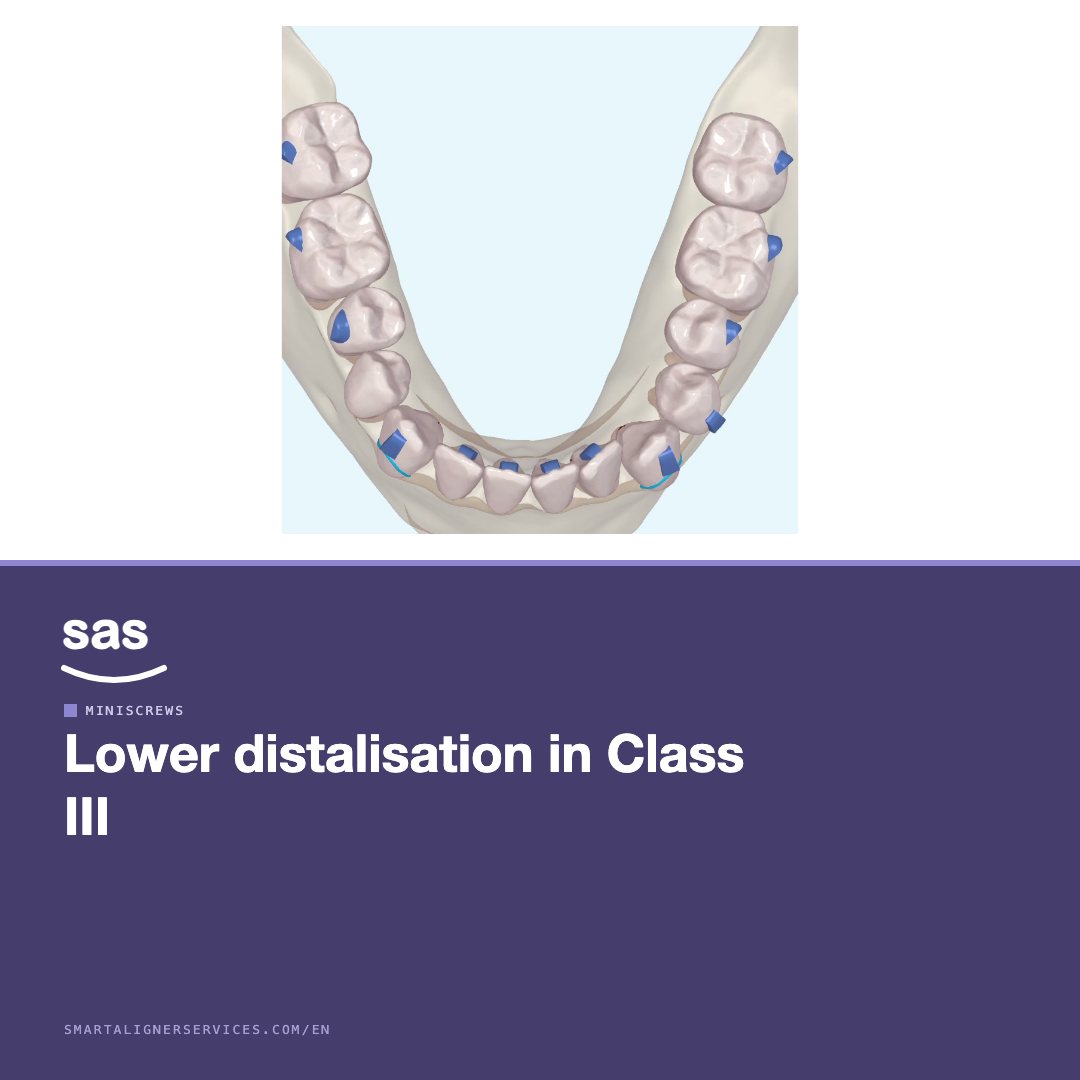
Lower distalisation with miniscrews in Class III
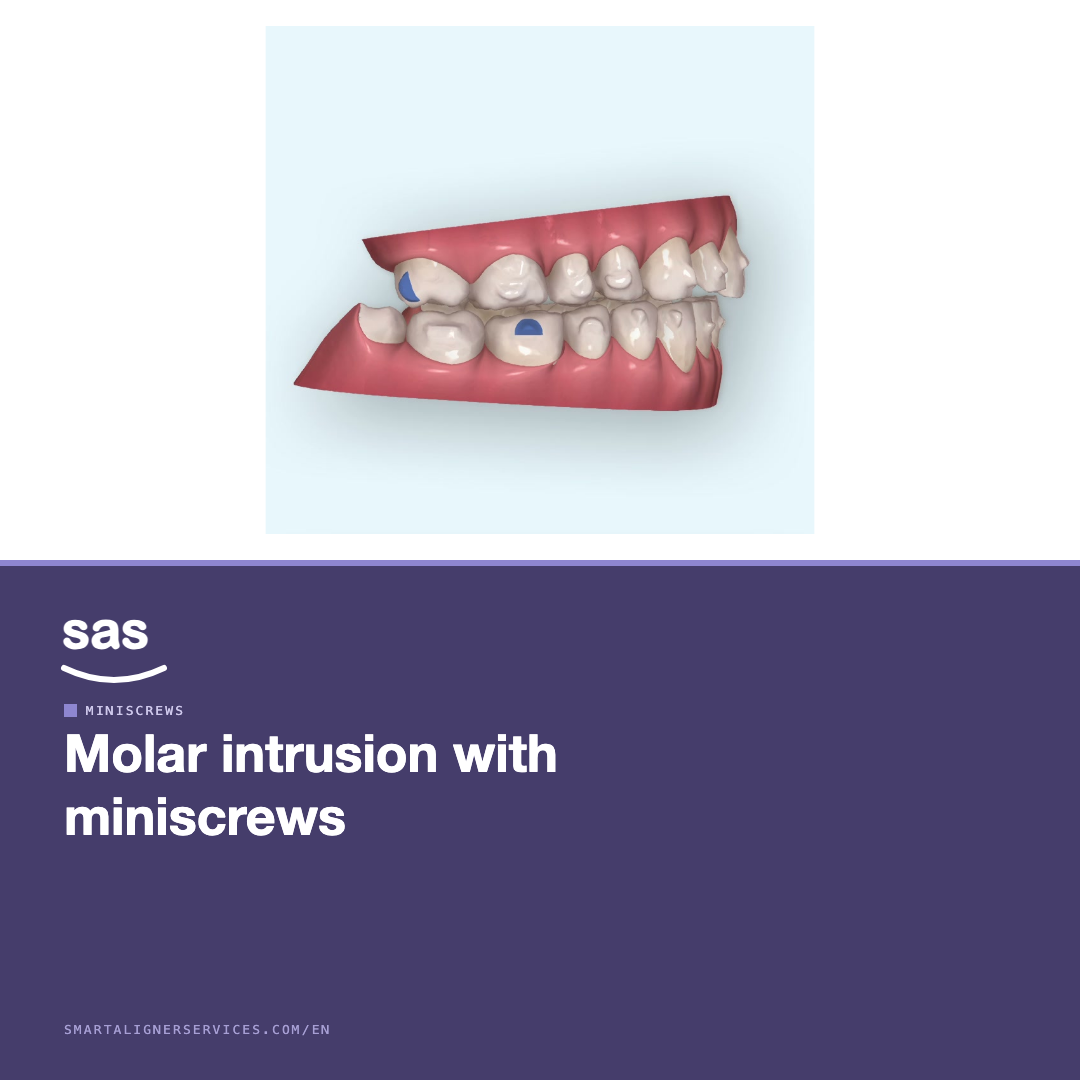
Molar intrusion with miniscrews to close an open bite


