

Clear aligner treatment planning: how it works
With clear aligners, the plan is the treatment. Every movement the patient will go through is decided before the first aligner is made, so the quality of the result depends far more on planning than on the plastic. Here is how a good treatment plan comes together, step by step.
Records and diagnosis come first
Planning starts with complete records: intraoral scans, photographs and radiographs, with a CBCT when roots, impacted teeth or bone limits need to be assessed. With those records the orthodontist defines the treatment goal before opening any software: molar and canine relationship, midlines, overjet and overbite, arch form and what the periodontium and the profile will allow. Software is very good at aligning teeth. It does not know what the case needs.
From the goal to the digital setup
The setup translates that goal into a final tooth position. This is where the key decisions are made: how much expansion is safe, whether space will come from IPR, proclination, distalisation or extractions, and how the occlusion should finish. A setup that only looks straight on screen, without answering those questions, is not a plan yet.
Staging: the order of movements
Staging decides what moves, when, and against what. By default, many setups move every tooth from the first aligner. In complex cases that often costs control. Good staging sequences the movements: create space before moving a tooth into it, keep anchorage units stable while others move, and alternate movements when the biomechanics need it. Two setups with the same final position can behave very differently in the mouth because of staging alone.
Attachments, IPR and auxiliaries
Attachments are placed where a movement needs grip, not wherever the software puts them by default. IPR is planned by contact, amount and stage. If the mechanics include elastics, buttons or miniscrews, they have to be built into the setup from the start, with precision cuts or cut-outs in the right place and movements that match the force that will be applied.
Reviewing before approving
The first proposal from the technician is a draft. The orthodontist reviews it against the goal, asks for changes and approves only when the movements, the staging and the anchorage make sense. A plan approved in a hurry is usually the origin of the refinements nobody planned.
Refinements are part of the plan
Every case shows some gap between the planned and the real movement. Good planning anticipates it with reasoned overcorrections and checkpoints, and treats refinements as a planned stage, not as a rescue.
When a second pair of eyes helps
Complex cases, or a setup that has gone back and forth with the technician without improving, benefit from a planning review by another orthodontist. With the Smart Aligner Services treatment planning service you prepare the case on your aligner brand’s platform (ClinCheck, iORTHO or similar) and upload it. Within 7 to 14 days you receive the plan with a detailed report, direct WhatsApp contact with the orthodontist who planned it, and all refinements included. If you disagree with something, it is changed.
Want to plan aligner cases with real biomechanical judgement, not software defaults? Explore how the SAS Method teaches advanced aligner planning and biomechanics at Smart Aligner Services, peer to peer, from orthodontist to orthodontist.
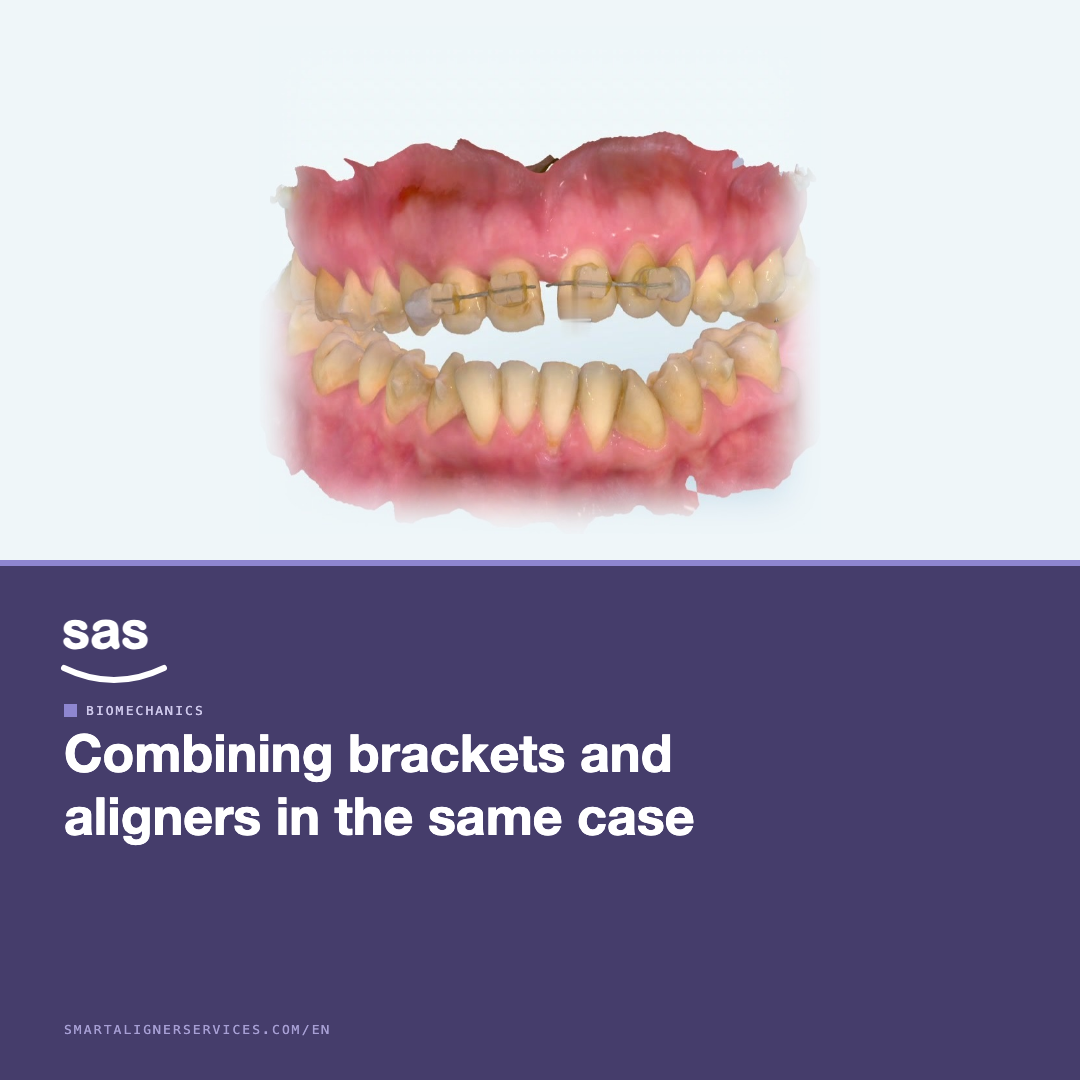
Combining brackets and aligners in the same case
How to write a prescription your CAD designer can follow

Infrazygomatic miniscrews to distalise a Class II with clear aligners

