


Using a Bolton discrepancy to simplify extraction cases
In extraction cases, the hard part usually isn’t opening the space, it’s closing it well. And the movement that complicates most is mesialising the posterior segments to bring the canines into Class I. Before committing to that movement, it’s worth reading a figure that often rewrites the whole mechanics: the Bolton discrepancy.
The Bolton discrepancy, the relationship between the mesiodistal size of the upper and lower teeth, isn’t just a number from the initial analysis. Read properly, it tells you whether a complex movement can be swapped for a simple one. And with aligners, where distalisation is a comfortable, well-anchored movement, that reading is worth a great deal.
Why mesialising the posterior segments is the movement to avoid
Picture a full Class II where, in a first phase, the upper first premolars have been extracted. You reach good intercuspation at molars and premolars, but with residual space at the front. The textbook route to leave the canines in Class I would be to mesialise the posterior segments.
The problem is that mesialisation tends to be complex. The crown is already mesial to the apex, so carrying the root behind it is hard work: it drains anchorage and tends to tip the tooth rather than move it bodily. With fixed appliances, holding that anchorage would often mean reinforcing it with mini-screws. It’s the classic movement you avoid if you can.
The discrepancy as the fact that changes the plan
This is where tooth-size analysis stops being a formality. Measure the mesiodistal diameters and, in this case, the lower premolars turn out to be wider than their upper antagonists. That excess lower width isn’t a nuisance, it’s the lever that lets you change the plan.
Before scanning for additional aligners, plan interproximal reduction in the lower arch. The nuance matters: that stripping isn’t there to “win space” for its own sake, it’s there to normalise the mesiodistal size of those premolars so the mechanics can be reversed.
Distalise instead of mesialising: the same goal, the easy way
Once the size is normalised, you no longer need to mesialise the posterior segments. You can keep them immovable and distalise the lower premolars instead. That distalisation is a simple movement, with plenty of anchorage in your favour, and it avoids the uncomfortable job of dragging teeth forward with the root trailing behind.
The shift isn’t minor: you go from a movement that fights the anatomy to one that uses it. The payoff is double, a correct final intercuspation and an extraction case finished in just two sets of aligners.
Diagnose before you move
The wider lesson goes beyond this case. Tooth-size analysis isn’t a figure you note at the start and forget, it’s a planning tool that can rewrite the entire mechanics. Reading the Bolton discrepancy in time turns the hardest movement of an extraction case into the easiest one. Often the case itself offers a shorter path, if you know how to read it.
—
Want to build your extraction mechanics on this kind of analysis? Explore how the SAS Method teaches advanced aligner biomechanics at Smart Aligner Services, peer to peer, from orthodontist to orthodontist.
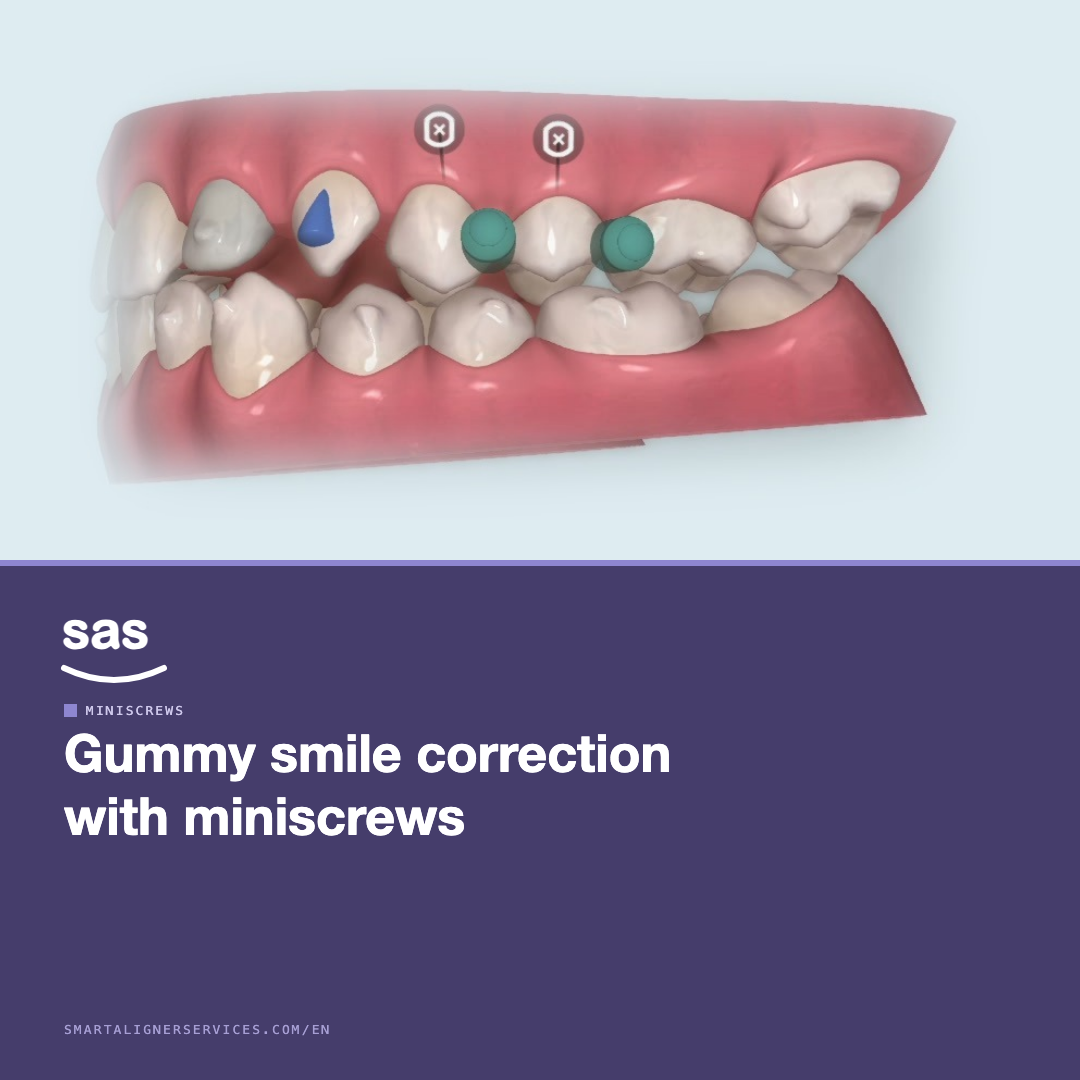
Correcting a gummy smile with miniscrews and clear aligners
Clear aligner treatment planning: how it works
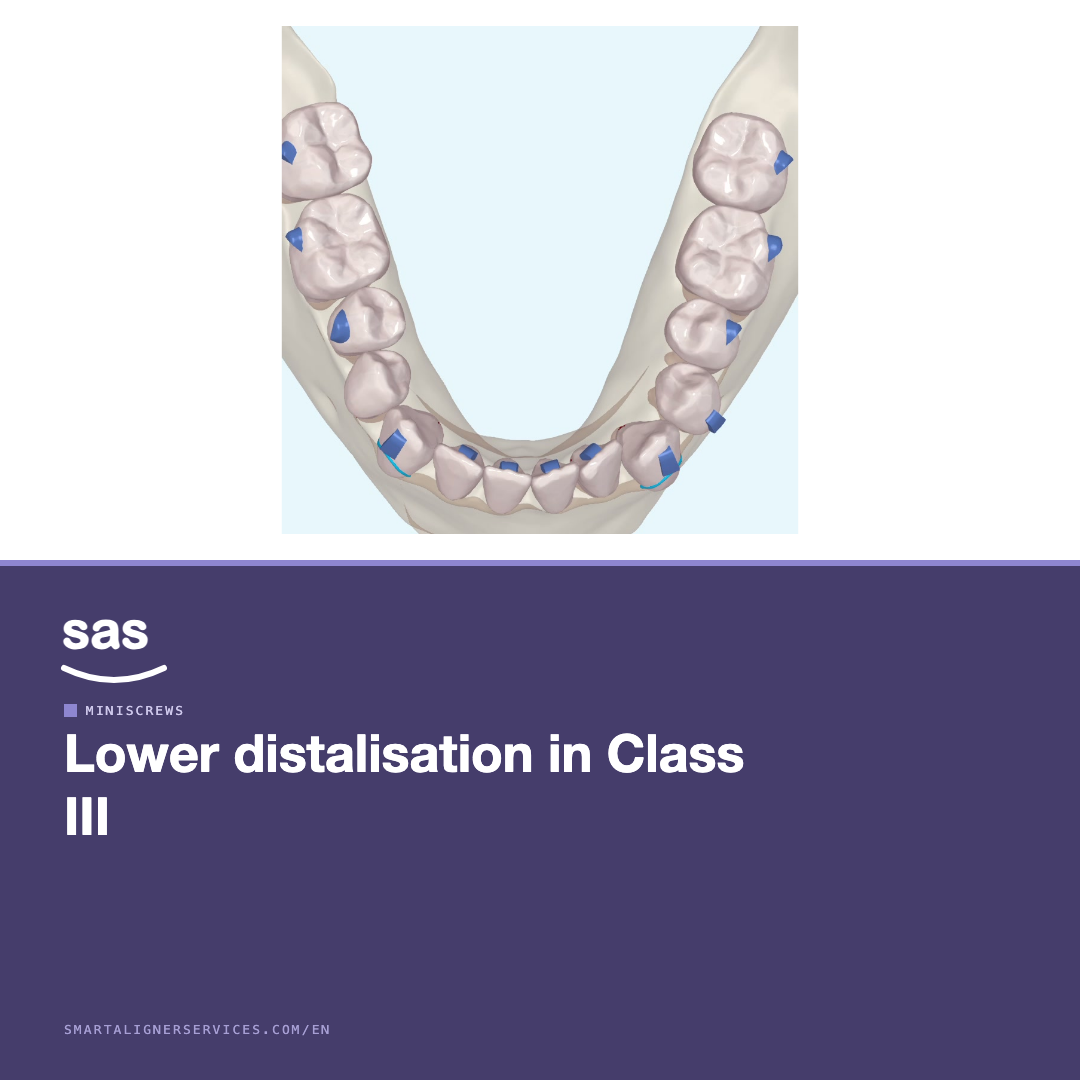
Lower distalisation with miniscrews in Class III


