

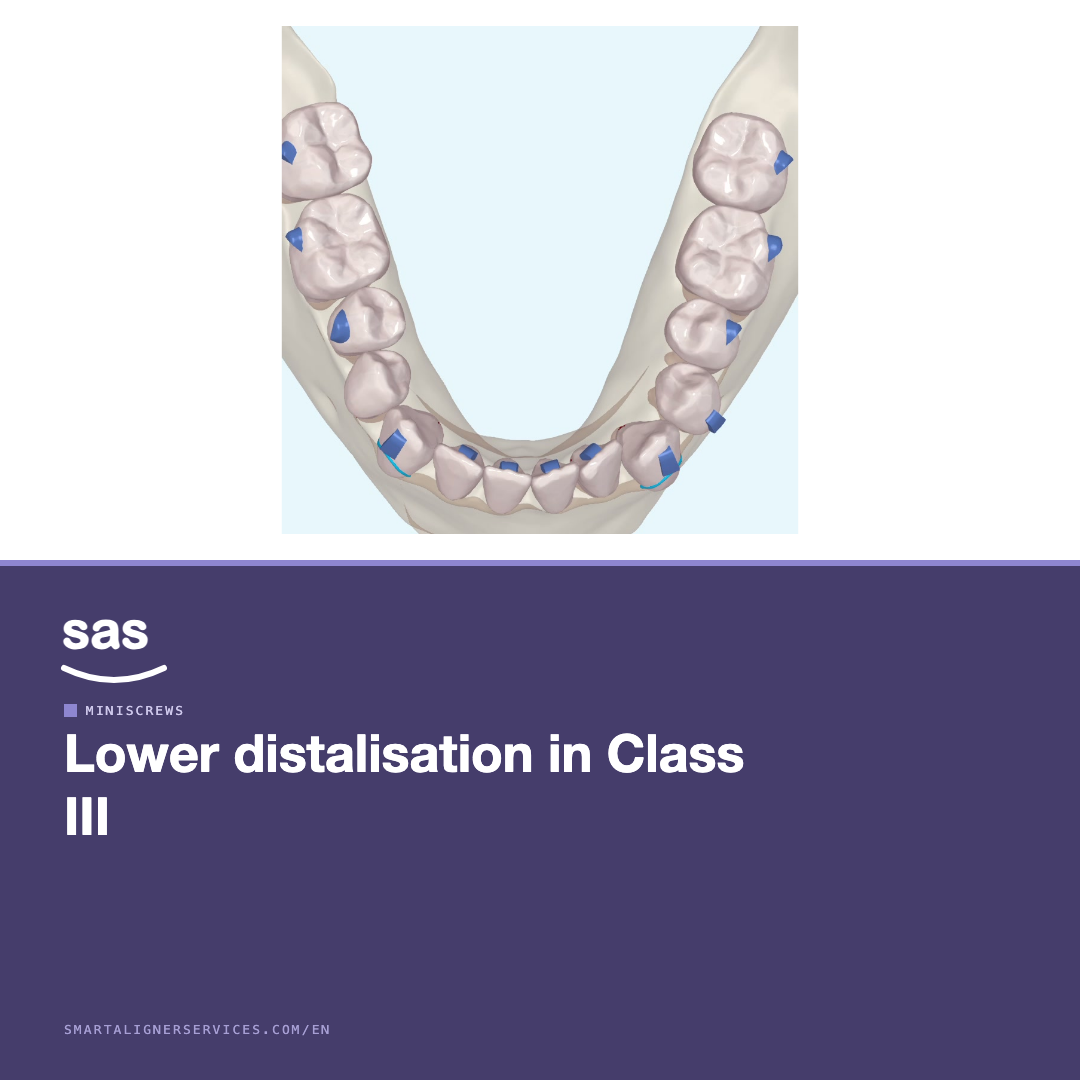
Lower distalisation with miniscrews in Class III
Many Class III cases come with maxillary hypoplasia, and that hypoplasia is rarely only transverse: it almost always has a sagittal component too. So in these cases the order of movements matters as much as the movements themselves. First we sort the maxilla, and only then do we distalise the lower arch, leaning on skeletal anchorage to make that movement predictable.
Maxilla first, lower arch second
The sequence starts by correcting the maxilla: after disjunction we fit a face mask and let the patient reach a better sagittal relation. With that base normalised, we begin the lower distalisation protocol. Trying to distalise the lower arch before improving the maxilla means fighting the case; doing it afterwards is following a movement whose ground is already prepared.
A one-half pattern, never a third
The cortical bone of the lower arch is denser than the upper, so distalisation has to be dosed. We programme a one-half pattern and do not drop to a third, changing aligners every seven days. It is a deliberately conservative rule: asking less per aligner is what lets the movement express itself in bone that forgives little.
The miniscrew in the external oblique ridge, not intermaxillary elastics
To sustain the distalisation without mesialising the teeth, rather than turning to intermaxillary elastics (which drag a lot of the upper-jaw component, already normalised) we place a miniscrew in the external oblique ridge, distal to the canine. That skeletal anchorage is what lets us distalise without losing control.
Spring, not chain
A point of mechanics: instead of a power chain, which deactivates quickly, we use a spring with metal ligatures. The spring gives a more continuous force, and it is that continuity a sustained distalisation needs. This way we correct the molar relation without proclining the incisors, because the maxilla is already in place.
—
Want to plan miniscrew-anchored distalisations with aligners? Explore how the SAS Method teaches advanced aligner biomechanics at Smart Aligner Services, peer to peer, from orthodontist to orthodontist.

Molar intrusion with miniscrews to close an open bite
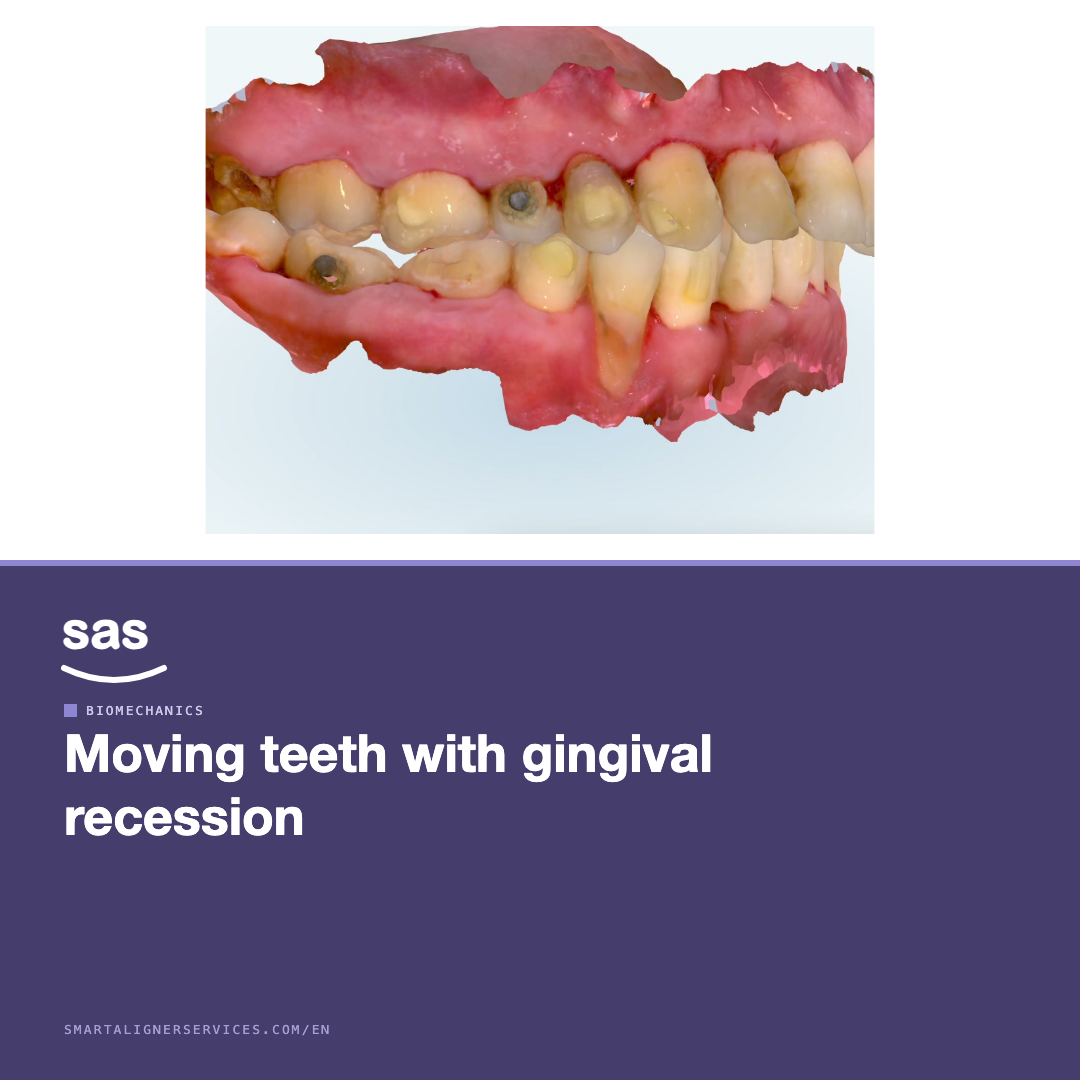
Moving teeth with gingival recession: sequence before force
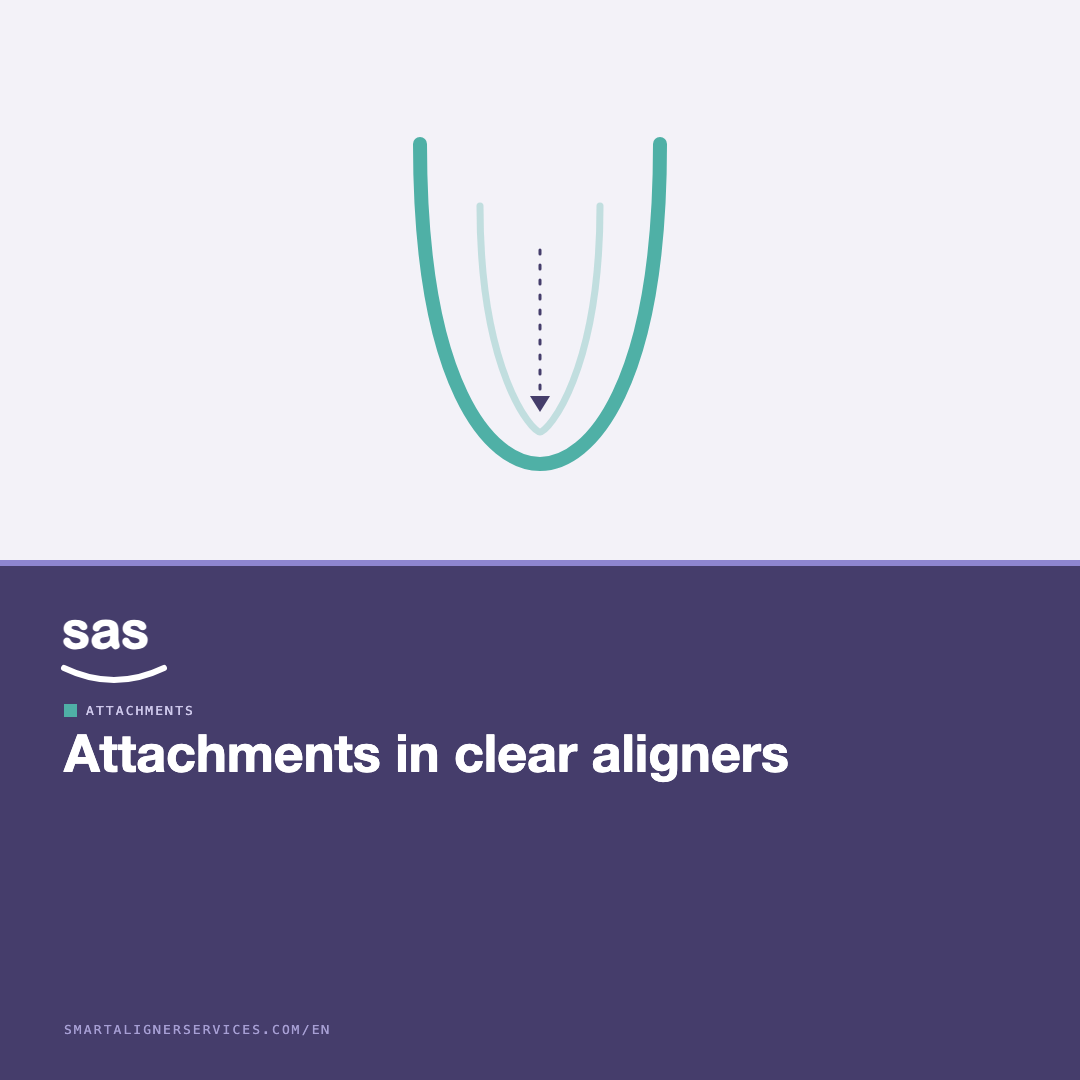
Attachments in clear aligners: what they do and which types matter


