

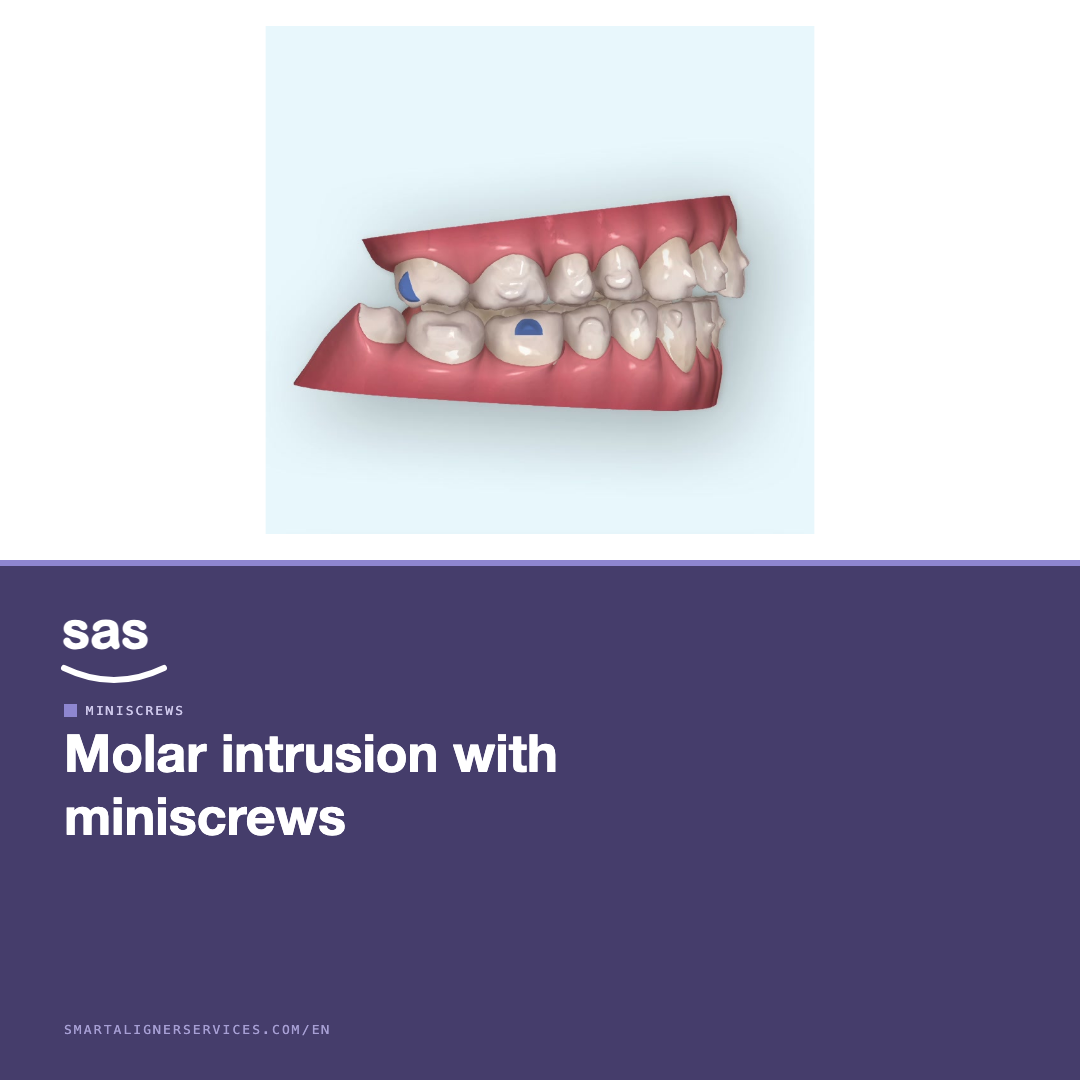
Molar intrusion with miniscrews to close an open bite
With an open bite there comes a point where you may have tried every sequence going, posterior intrusion, anterior extrusion, bite ramps, and still not closed it. When the aligner on its own cannot deliver the posterior intrusion the case needs, the answer is not to push harder with more of the same, but to change tool and lean on skeletal anchorage: miniscrews and aligners working together.
Recognise the aligner’s limit early
Intruding the posterior segments is one of the movements aligners resist most. Re-planning the setup to ask for posterior intrusion, adding a bite ramp or other elements helps, but in many cases it falls short. Spotting that limit in time saves you from stretching the treatment chasing a movement the tray will not give.
Vestibular and palatal miniscrews, elastic over the aligner
The solution is to place miniscrews, vestibular and palatal, and have the patient run an elastic over the aligner, from one screw to the other. That elastic supplies the sustained intrusive force the plastic does not hold. The condition is to coordinate it with the digital setup from the start, so the aligner mechanics and the anchorage pull the same way.
Selective, sequenced intrusion: molars first, then premolars
Here is the key: you do not intrude everything at once. You intrude the molar first (the 6) and, with it in position, move to the premolars (the 5 and the 4), the same on both sides. Sequencing the movement is what lets you solve it with few aligners, around twenty here. The elastic follows that sequence, helping the molar intrusion first and the premolars after.
The result, with few aligners
Closed this way, the open bite resolves far more simply than by forcing the aligner set after set. The underlying principle transfers to other difficult posterior-intrusion cases: when the movement exceeds what the tray can sustain, well-sequenced skeletal anchorage does the work, and the aligner sticks to what it does best.
—
Want to bring miniscrews and intrusion sequencing into your own aligner cases? Explore how the SAS Method teaches advanced aligner biomechanics at Smart Aligner Services, peer to peer, from orthodontist to orthodontist.
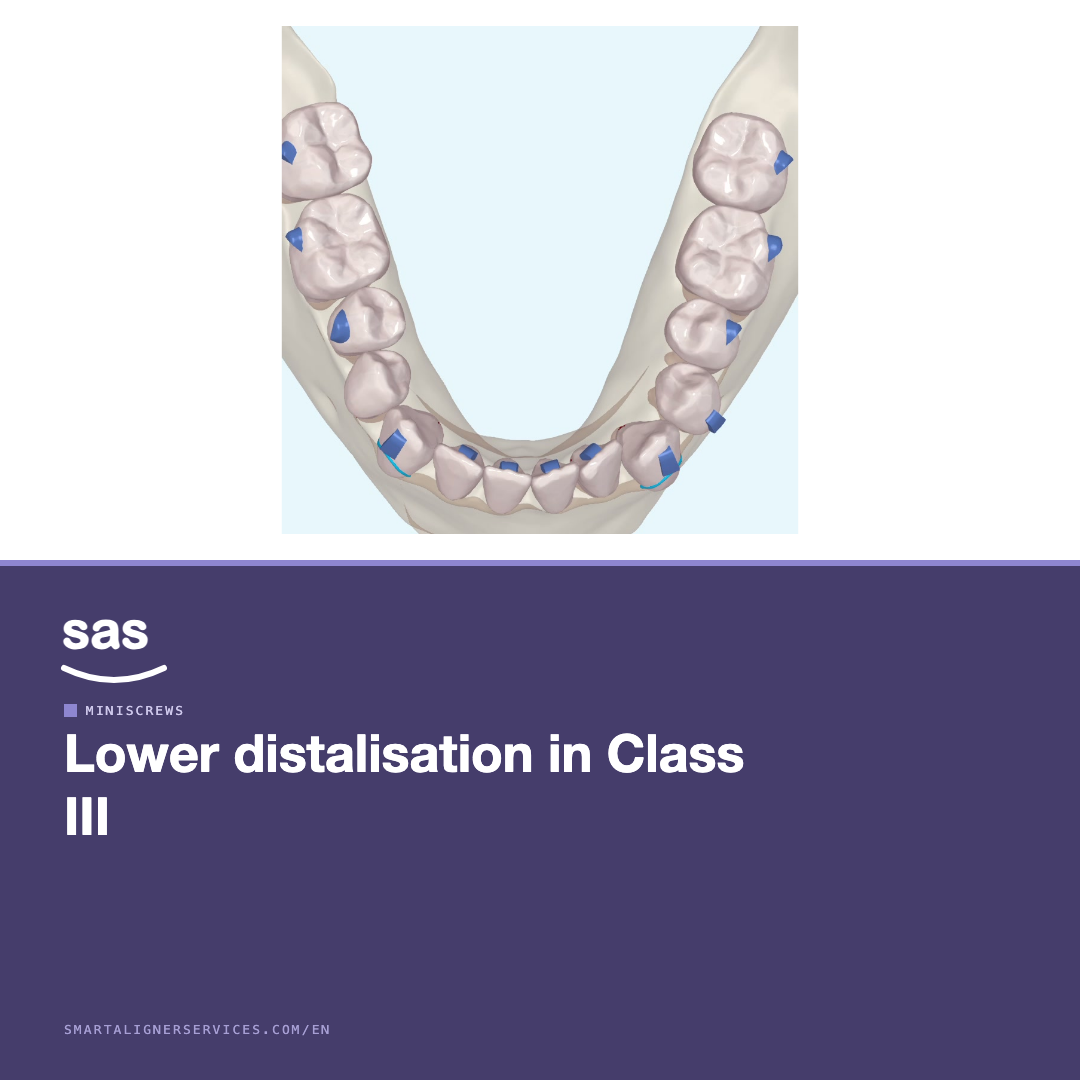
Lower distalisation with miniscrews in Class III
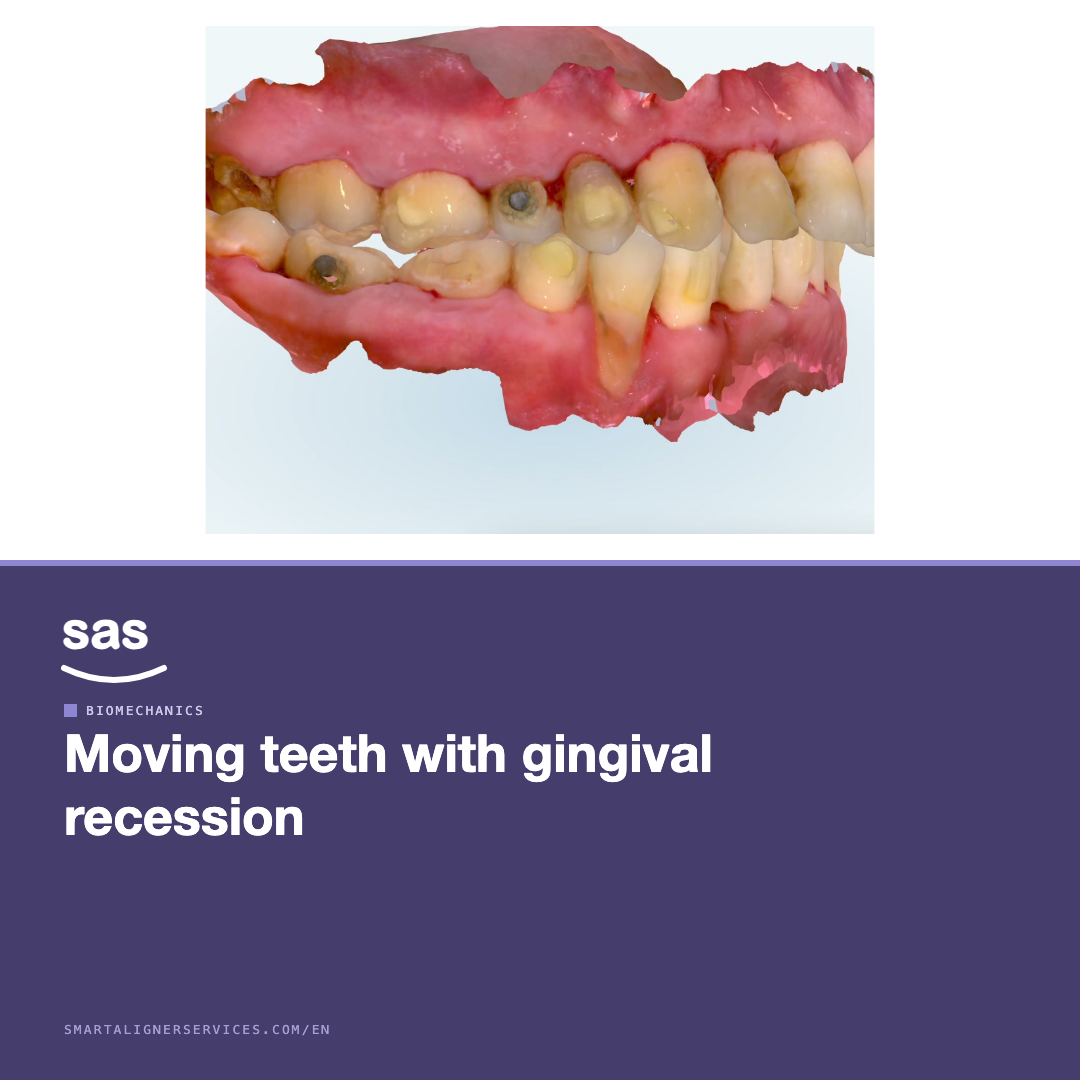
Moving teeth with gingival recession: sequence before force
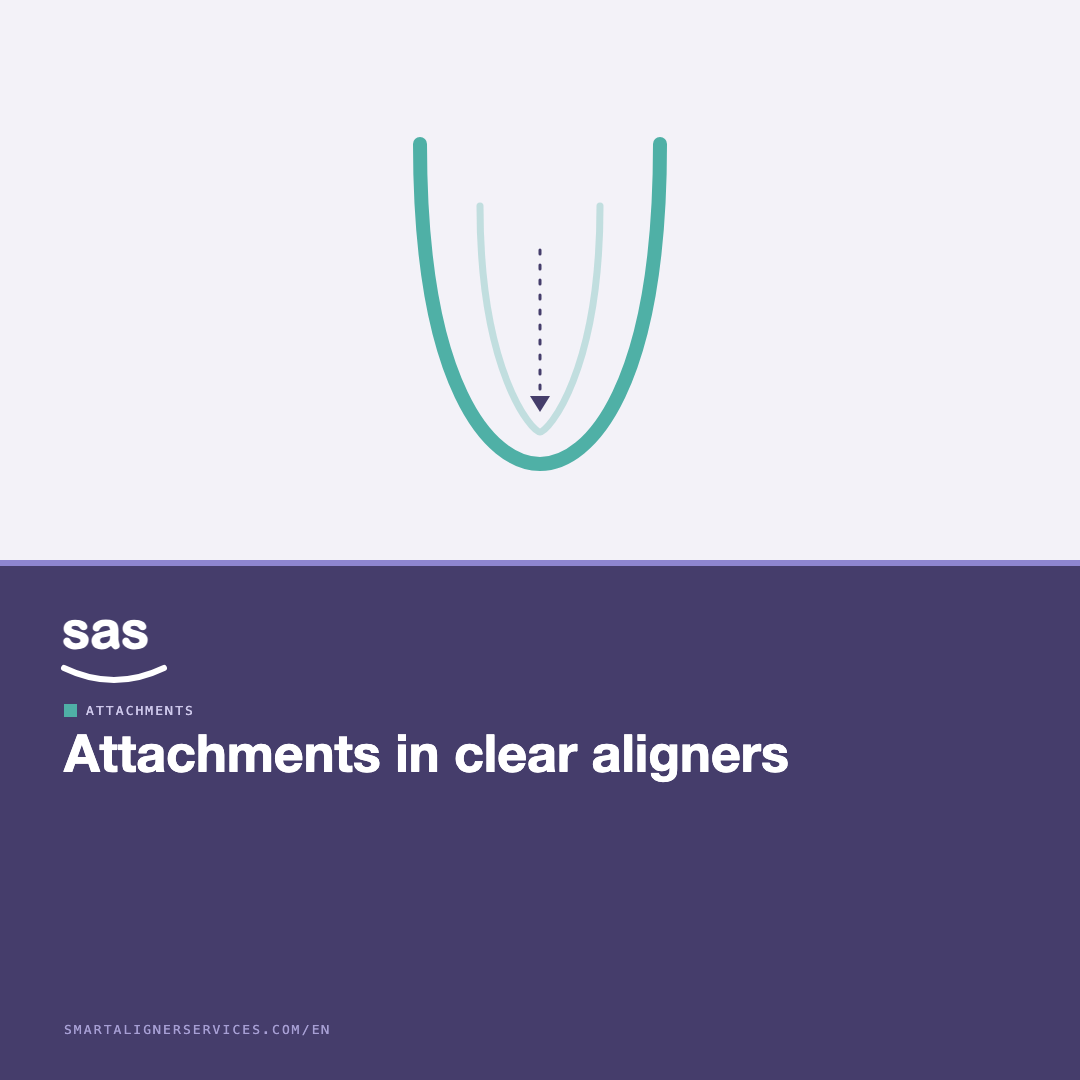
Attachments in clear aligners: what they do and which types matter


