

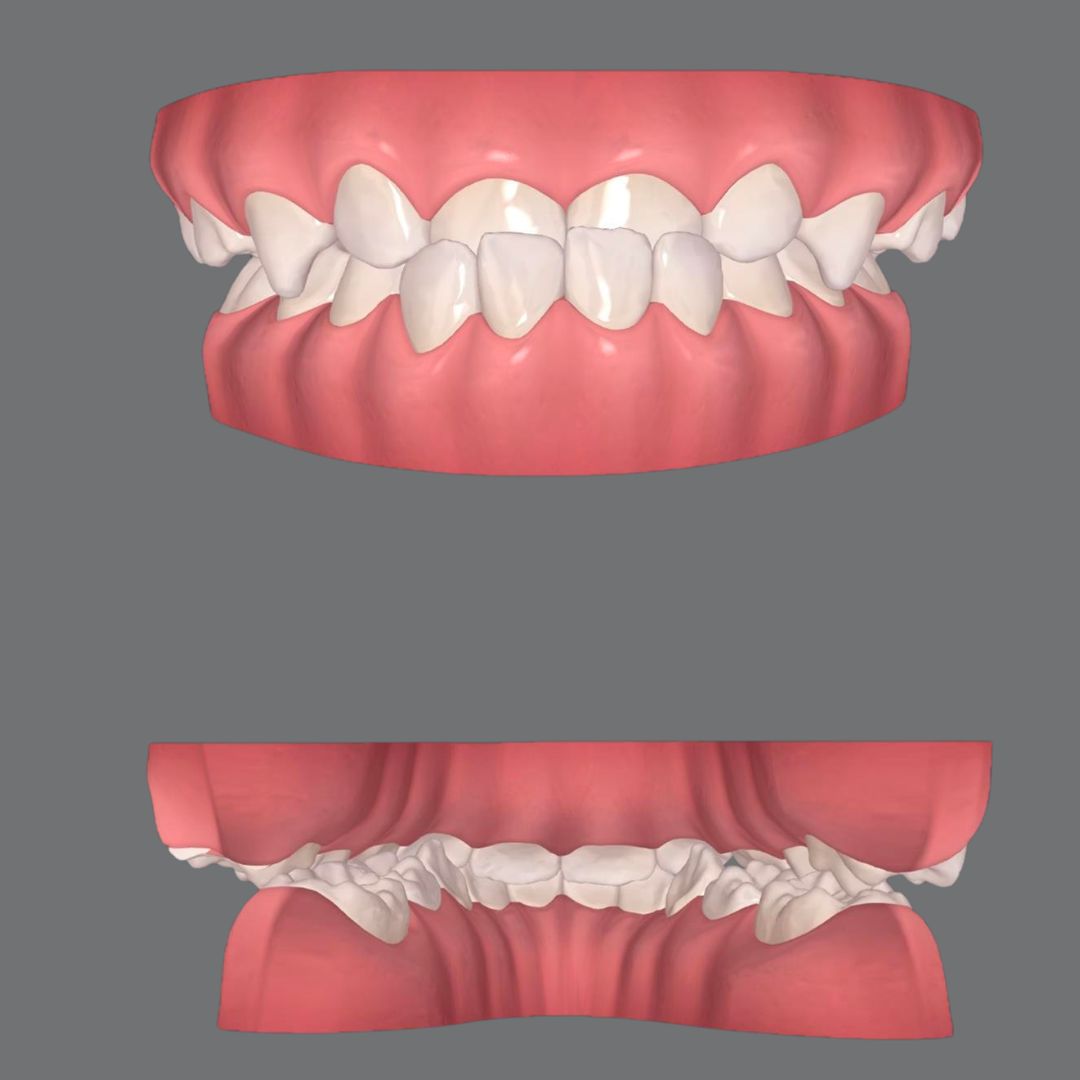
Arch Compression with Aligners: Why Sequence Beats Force
Most arch compressions that end in a refinement didn’t fail because the movement was hard. They failed because the stages were planned in the wrong order. Compressing a dental arch with clear aligners is actually highly predictable, but only when each phase is set up to make the next one possible. Here is how we sequence it in the SAS Method, where the planning logic stays in the clinician’s hands instead of being delegated to the technician.
Start by freeing the most distal molar
Compression begins at the back of the arch, not at the front. Using the 3D controls, distalize the most distal molar and open a defined space mesial to it. The instruction your technician has to understand is this: that mesial space is part of the final position, not a temporary gap to be closed in a later stage. In aligner biomechanics, planned space is not a planning error; it is a biomechanical condition that the rest of the sequence depends on.
Compress the molar and procline the incisors in the same step
With the distal molar’s target defined, compress that molar slightly, around 0.8 mm where the anatomy allows, at the same time as you procline the incisors. The timing matters more than the millimetres: compress simultaneously with proclination, never during retrusion. If you try to narrow the molar while the incisors are retracting, the system has neither the space nor the anchorage to express the movement, and it gets lost.
With the molar parked, the rest of the arch follows
Once the distal molar sits in place, space mesial to it, incisors proclined and aligned even if still tipped, compressing the remaining segment becomes a movement anchored at both ends at once. That simultaneous mesial-and-distal anchorage is what makes the middle segment predictable: the aligner has solid support on either side and can work the central teeth with precision.
Two non-negotiables
These two indications separate a clean result from a refinement:
- Torque compensation. For every 1 mm of arch compression, add 1° of lingual root torque to the teeth being compressed. Skip it and the compression expresses as uncontrolled tipping that costs you both esthetics and long-term stability.
- Transverse coordination, the whole way. Upper and lower arches must stay transversely coordinated through every stage, not only at the finish. Lose coordination in an intermediate step and occlusal interferences appear that block the movement or deflect it off course.
Order is what creates the space
Arch compression is not a difficult movement; it is a movement that demands each phase prepare the next. Free the distal molar first, procline the incisors in the same step as that initial compression, and hold torque and transverse coordination across the entire sequence, and the result is predictable and stable, without spending a refinement to undo what poor planning created. That ordering discipline is the core of the SAS Method.
Want to plan arch compressions on your own clinical criteria, instead of inheriting the technician’s setup? Learn how the teaches advanced aligner biomechanics at Smart Aligner Services.
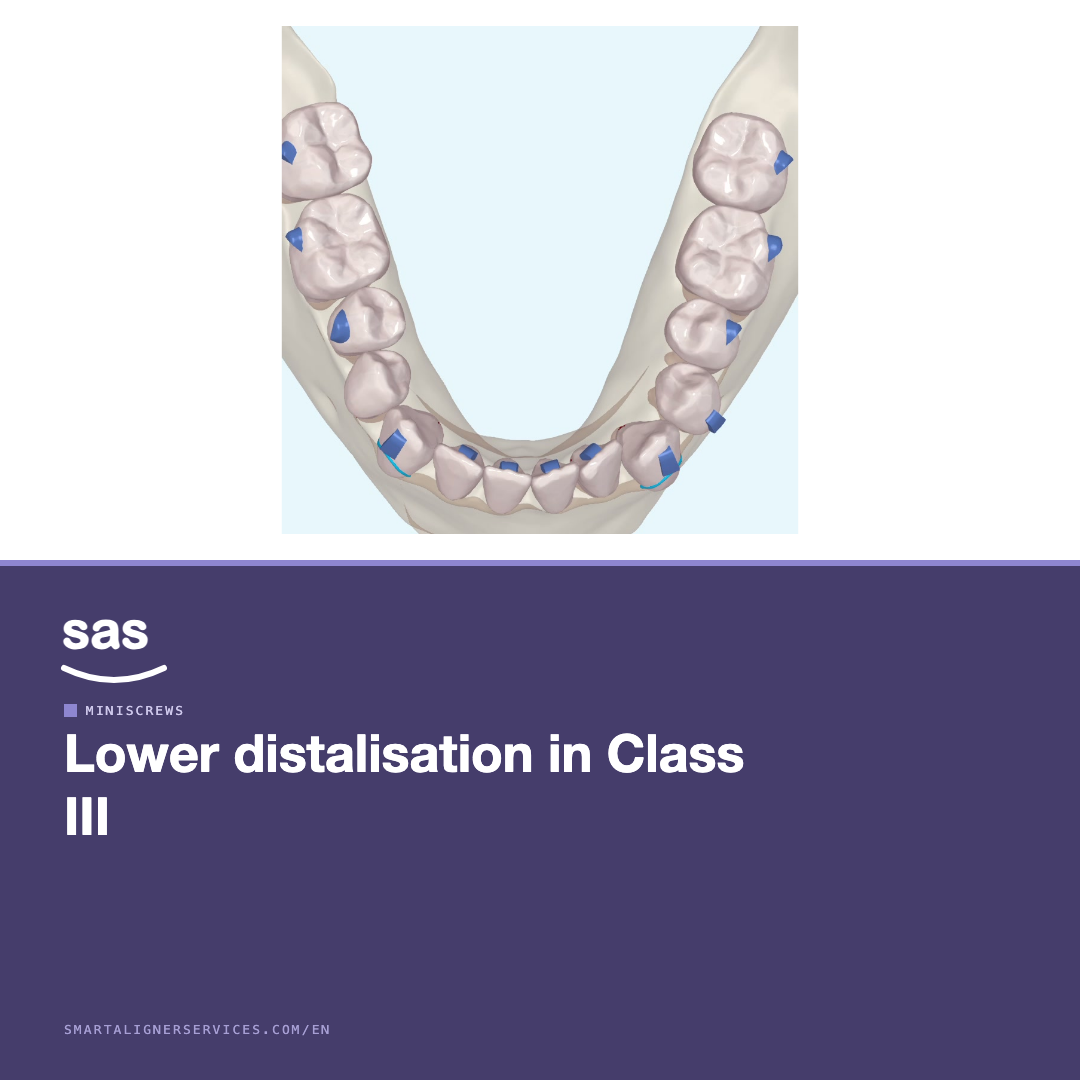
Lower distalisation with miniscrews in Class III
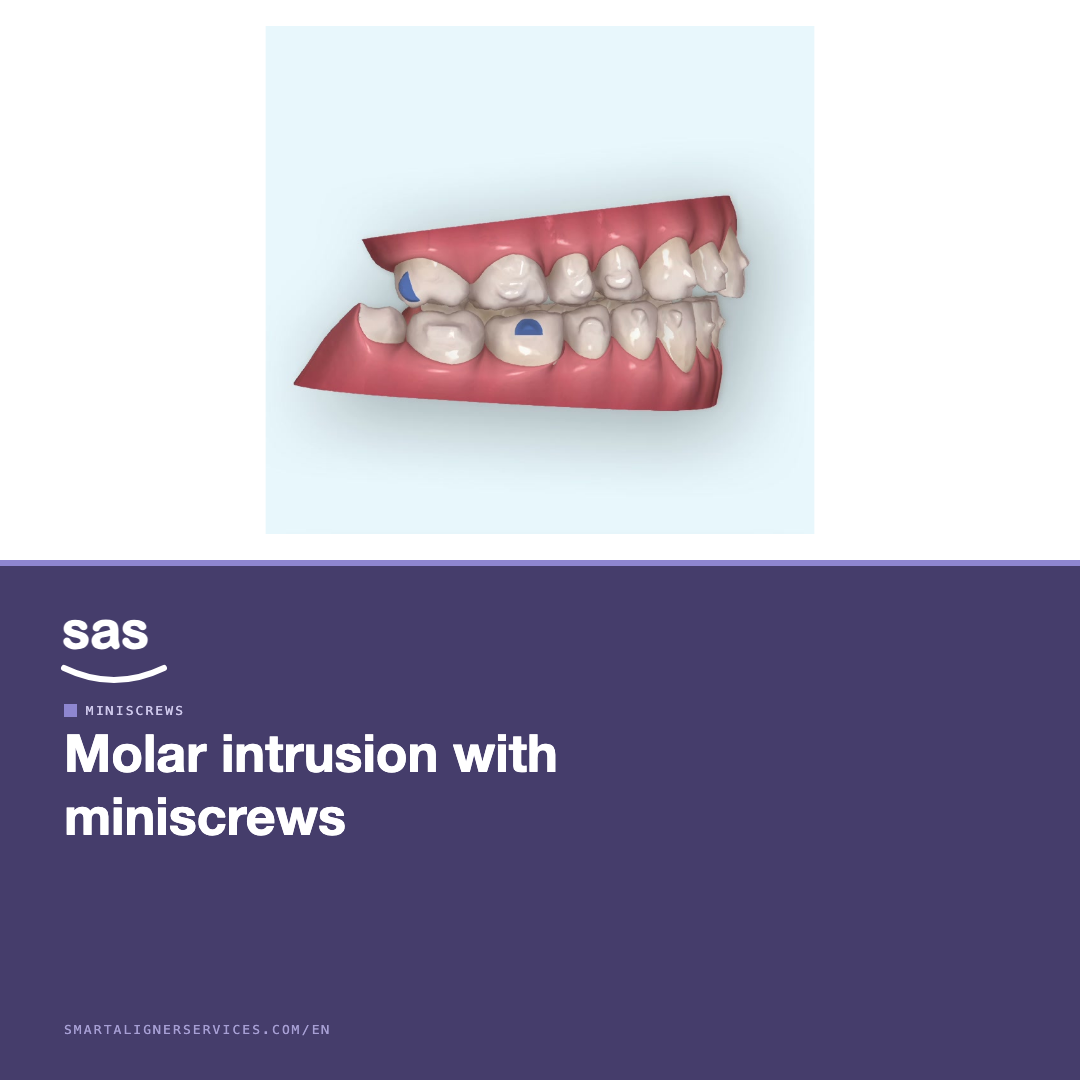
Molar intrusion with miniscrews to close an open bite
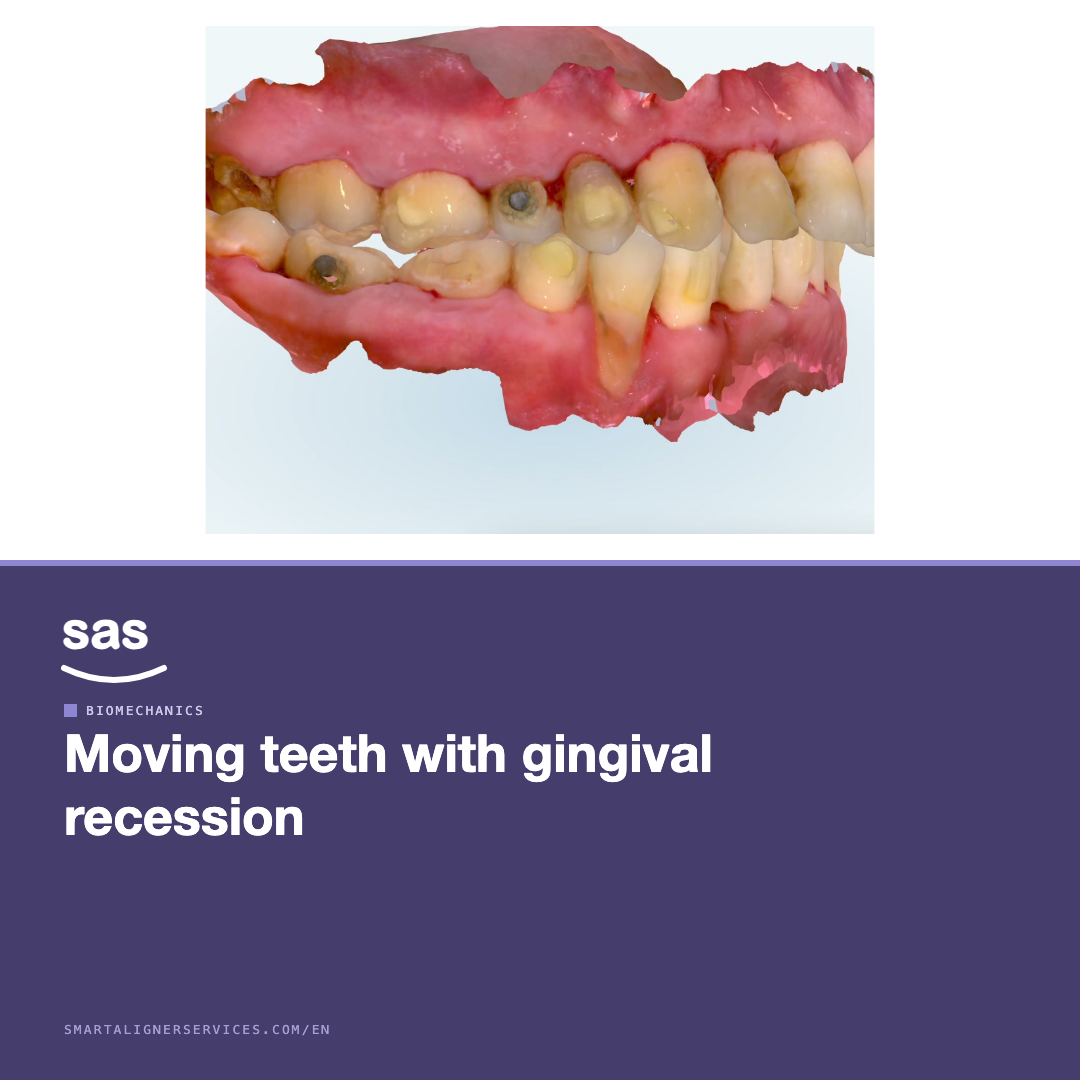
Moving teeth with gingival recession: sequence before force


