

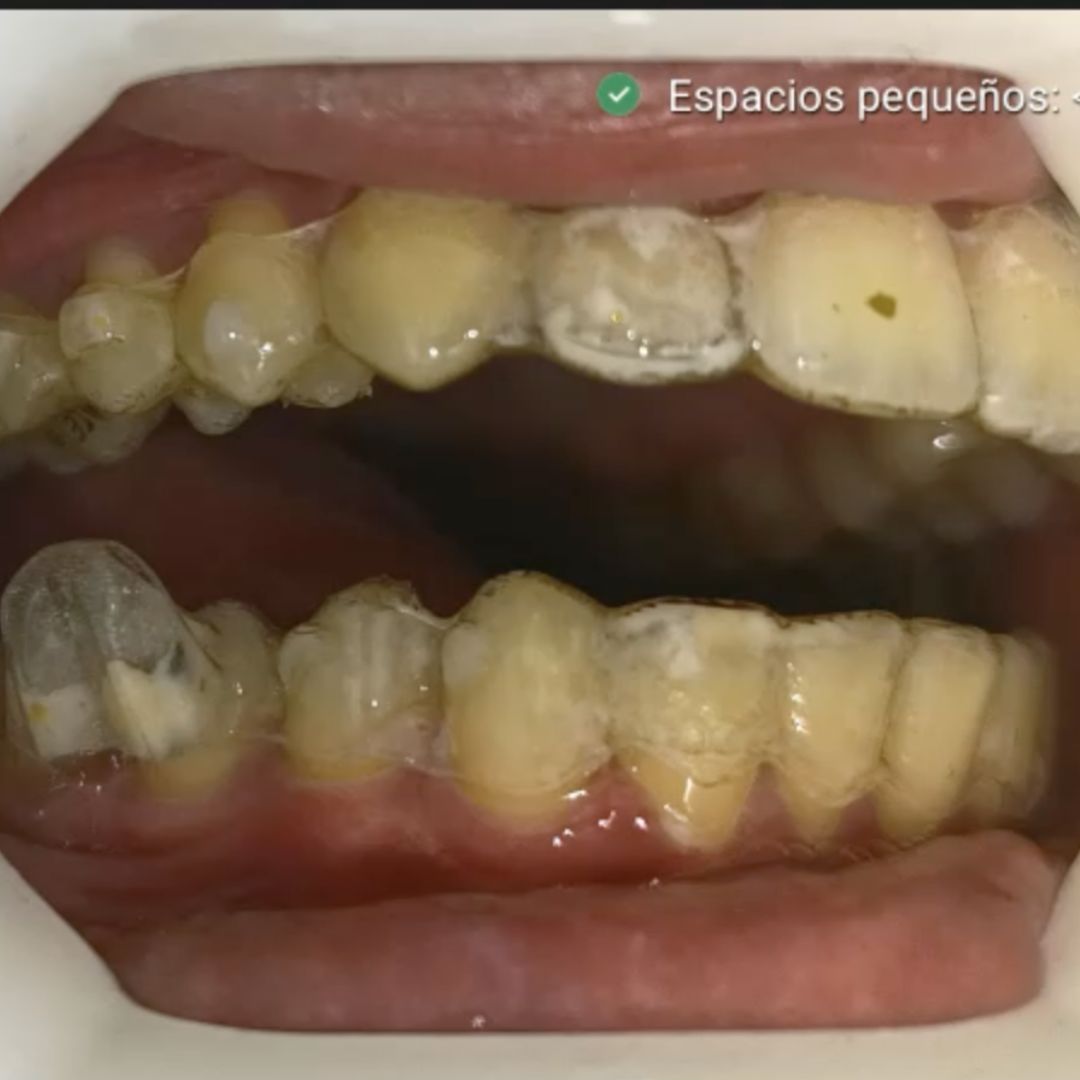
Mandibular advancement with clear aligners
Mandibular advancement with clear aligners is increasingly used in the treatment of sagittal discrepancies in growing patients and in selected adults. However, the predictability of advancement does not depend only on the appliance itself, but on prior control of occlusal interferences and the quality of monitoring during the active phase.
One of the most important and often underestimated stages of the process is the pre advancement phase.
The pre advancement phase: eliminating interferences before advancing
Before initiating any mandibular advancement, it is essential to ensure that no occlusal interferences are present that could block the forward positioning of the mandible.
Traditionally, in fixed orthodontics, partial appliances or initial alignment phases were used to eliminate premature contacts and create a stable occlusal environment. With aligners, the same logic can be applied through an initial phase focused on resolving interferences by means of alignment, leveling, and the creation of adequate overjet to allow advancement without mechanical restrictions.
This is not simply about starting the advancement. It is about creating the conditions for a functionally stable movement.
When the occlusal curve is controlled, sufficient overjet is present, and there are no posterior contacts blocking movement, the mandible can be positioned forward without generating unwanted compensations.
The clinical value of monitoring
Once the advancement phase begins, treatment becomes highly sensitive to small variations in aligner fit and to the appearance of new interferences.
In this context, regular monitoring, including remote monitoring through structured photographic records, becomes clinically relevant. The goal is not only to confirm that the patient is wearing the aligners, but to verify:
- That no posterior interferences have appeared
- That mandibular advancement is progressing without blockage
- That aligner seating is correct
- That the occlusal curve remains stable
This type of follow up allows early detection of discrepancies that, if left unnoticed, may require new aligners, modifications to the treatment plan, or lead to unnecessary delays.
The difference between reviewing a patient every one or two months without intermediate control and implementing systematic monitoring is significant. In mandibular advancement, small changes can have an important cumulative impact.
Advancement systems and mechanical sensitivity
Current mandibular advancement systems with aligners, whether based on solid blocks, hollow structures, or integrated precision features, are more comfortable for patients than traditional functional appliances. However, this comfort does not eliminate the need for clinical control.
Mandibular advancement is inherently dependent on occlusal stability. Any posterior interference can deviate the mandible or limit its forward positioning. For this reason, monitoring is not simply a technological add on. It is part of the biomechanical design of the treatment.
Methodology and process control
At Smart Aligners Services, mandibular advancement is approached as a structured process based on three key stages:
Occlusal preparation before advancement
Advancement in the absence of interferences
Active monitoring to maintain mechanical stability
The key is not only the advancement mechanism, but the control of the occlusal environment surrounding it.
When orthodontists understand and apply this sequence in their planning, mandibular advancement stops being an uncertain phase and becomes a controlled and predictable progression.
Plan mandibular advancement with the SAS Method
The SAS Method provides a structured approach to managing mandibular advancement with clear aligners, focusing on occlusal control, sequencing, and continuous monitoring.
Learn how to design advancement protocols that are stable, predictable, and clinically efficient, even in complex cases.
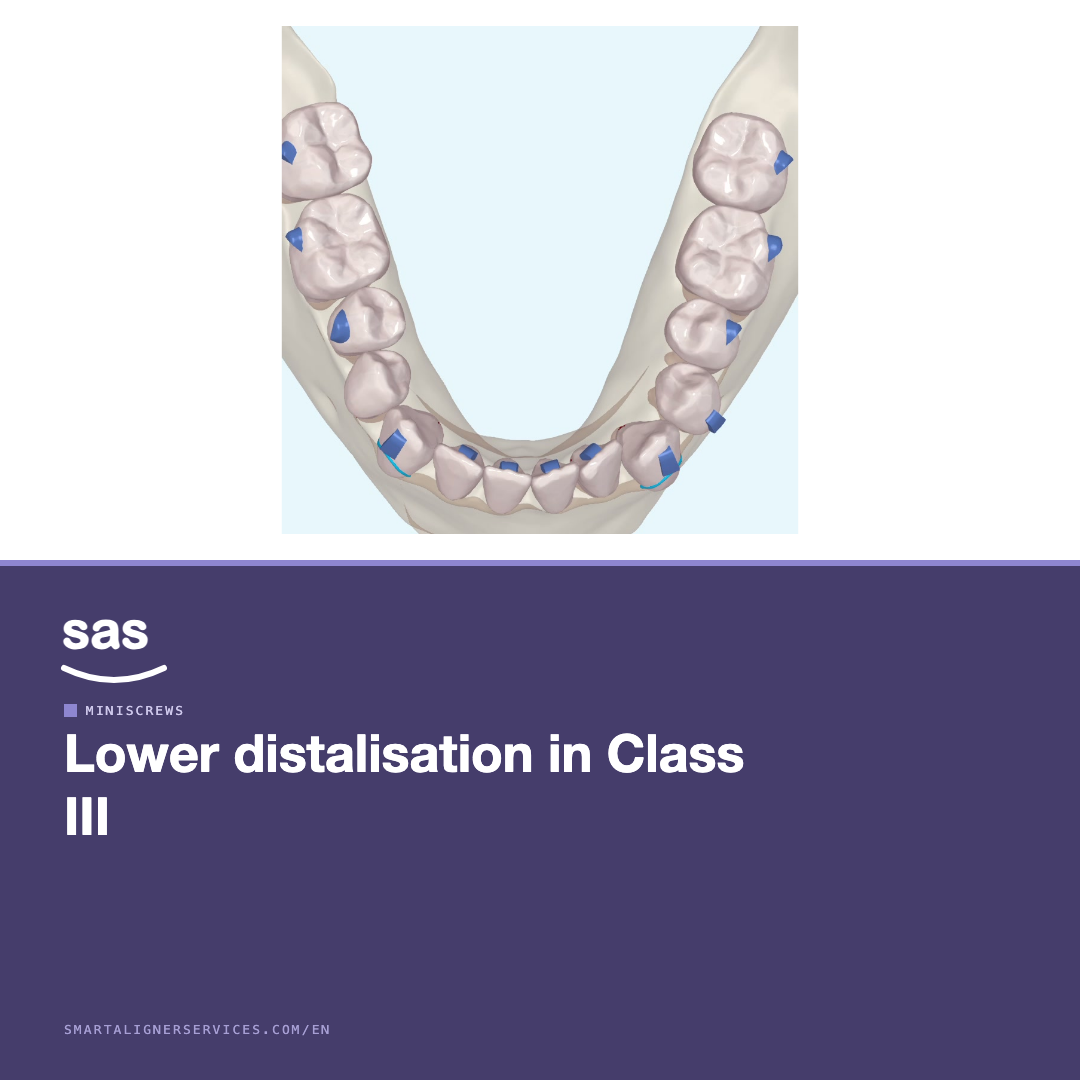
Lower distalisation with miniscrews in Class III

Molar intrusion with miniscrews to close an open bite
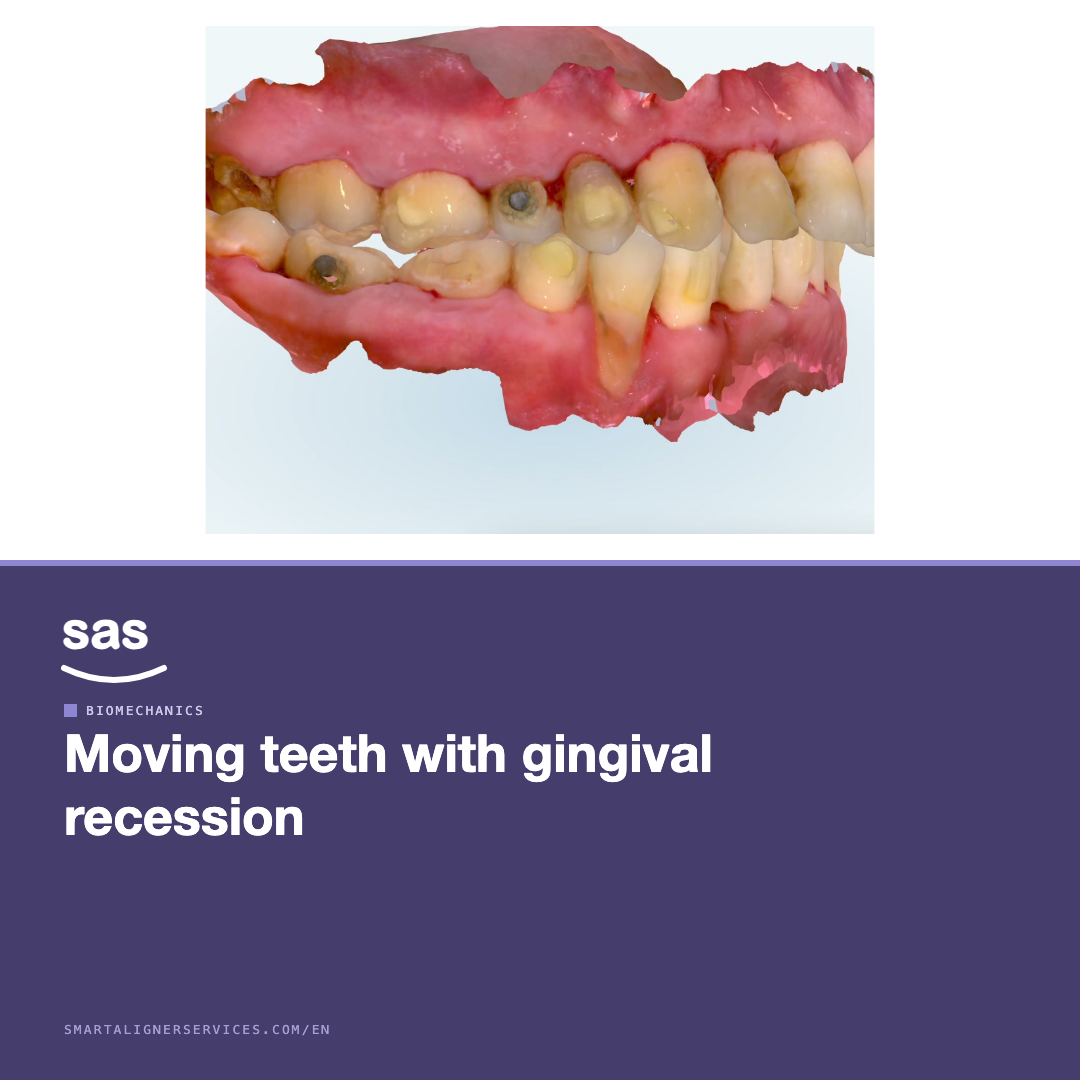
Moving teeth with gingival recession: sequence before force


