

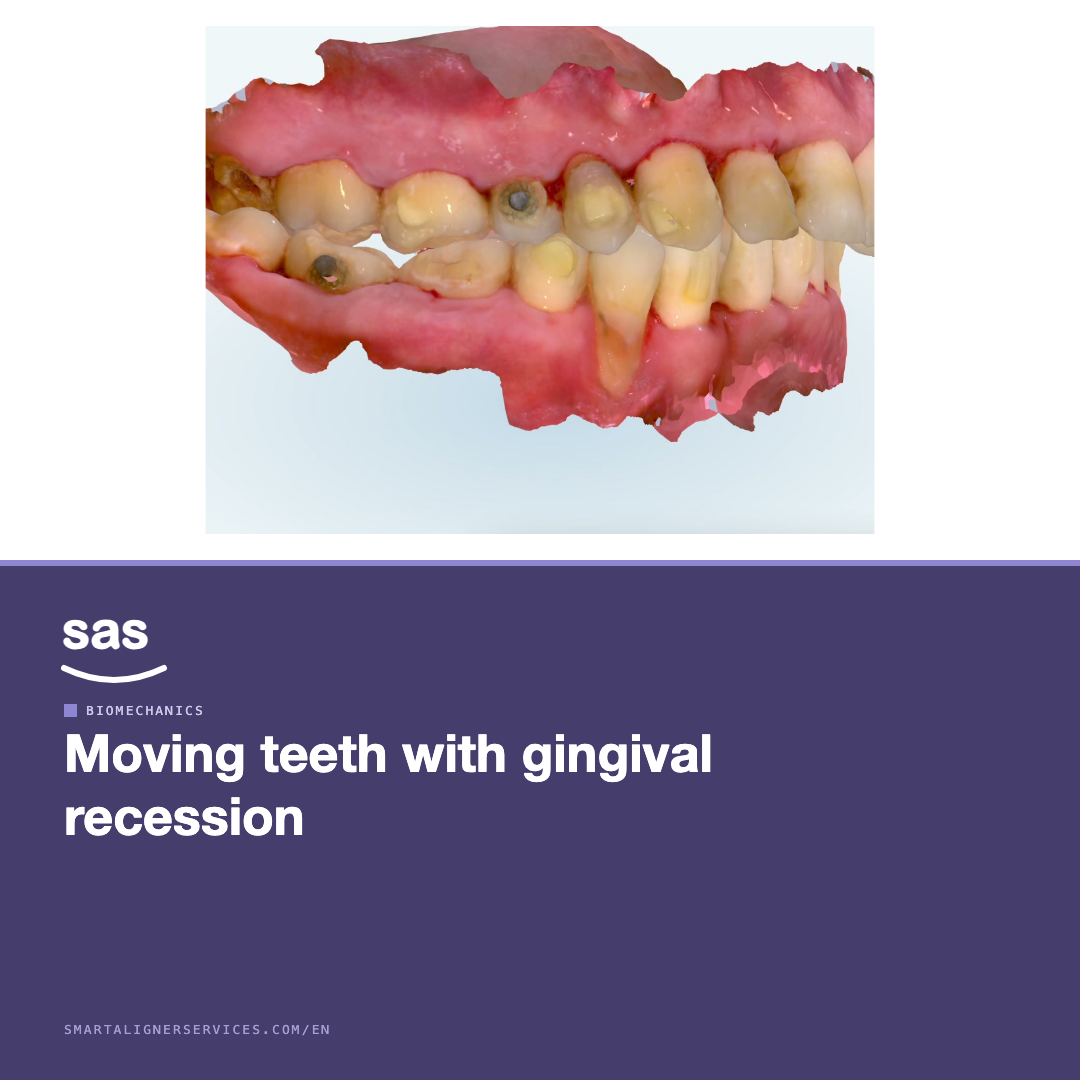
Moving teeth with gingival recession: sequence before force
In a tooth with marked gingival recession, the risk isn’t so much in the movement you want to make as in when you decide to make it. Moving it early, before you have anchorage, is the quickest way to lose control exactly where the tissue is most delicate. The key, almost always, is the sequence.
Aligners give you an advantage here: you can decide precisely which aligner each tooth starts moving in. That ability to sequence is exactly what a root needs when it has to be repositioned through a compromised periodontium, where the margin for error is minimal.
The mistake of starting with root torque
Picture a lower premolar with a marked recession and its root out of the ideal position. The natural impulse is to correct it as soon as possible, applying lingual root torque from the very first phases.
That’s precisely what not to do. In the early phases the rest of the arch is still moving, so there’s no stable anchorage to lean on. Forcing torque on that root at that moment leaves you with little control over the tooth that forgives it least, right where the bone support and gingiva are most fragile.
The rest of the arch as anchorage: wait for everything else to finish
The alternative is to plan the treatment by moving every tooth and leaving the root movement of the compromised tooth until the end, once the rest has finished and its crown is in position.
At that point everything changes. The whole arch, now stabilised, acts as a powerful anchorage unit, and the root can be carried to its position with a slow, highly controlled movement. That’s exactly what an area of recession asks for: light, sustained forces with no rush, instead of an early push that’s hard to dose.
A Warren spring effect, without the spring
Saving that movement for the end gives you an effect much like a Warren spring: a sustained, gentle action on the root, with the whole dentition serving as the base. Aligner sequencing achieves what you’d chase with an auxiliary in fixed appliances, but without adding hardware or depending on compliance to place it.
In the case, every tooth is moved and the root of the compromised premolar is left until the end, from around aligner nineteen, which is when the others have finished. It isn’t an isolated movement you force, it’s the last step of a sequence designed so that it arrives in the best possible conditions.
In recession, the sequence is the treatment
The principle transfers to any periodontally compromised tooth: don’t just ask how to move it, ask when. Placing everything else first and leaving the delicate tooth for last turns the rest of the arch into your best anchorage and converts a risky movement into a predictable one. Thinking about the sequence before the force is often what separates a treatment that respects the periodontium from one that compromises it.
—
Want to sequence this kind of case with confidence? Explore how the SAS Method teaches advanced aligner biomechanics at Smart Aligner Services, peer to peer, from orthodontist to orthodontist.
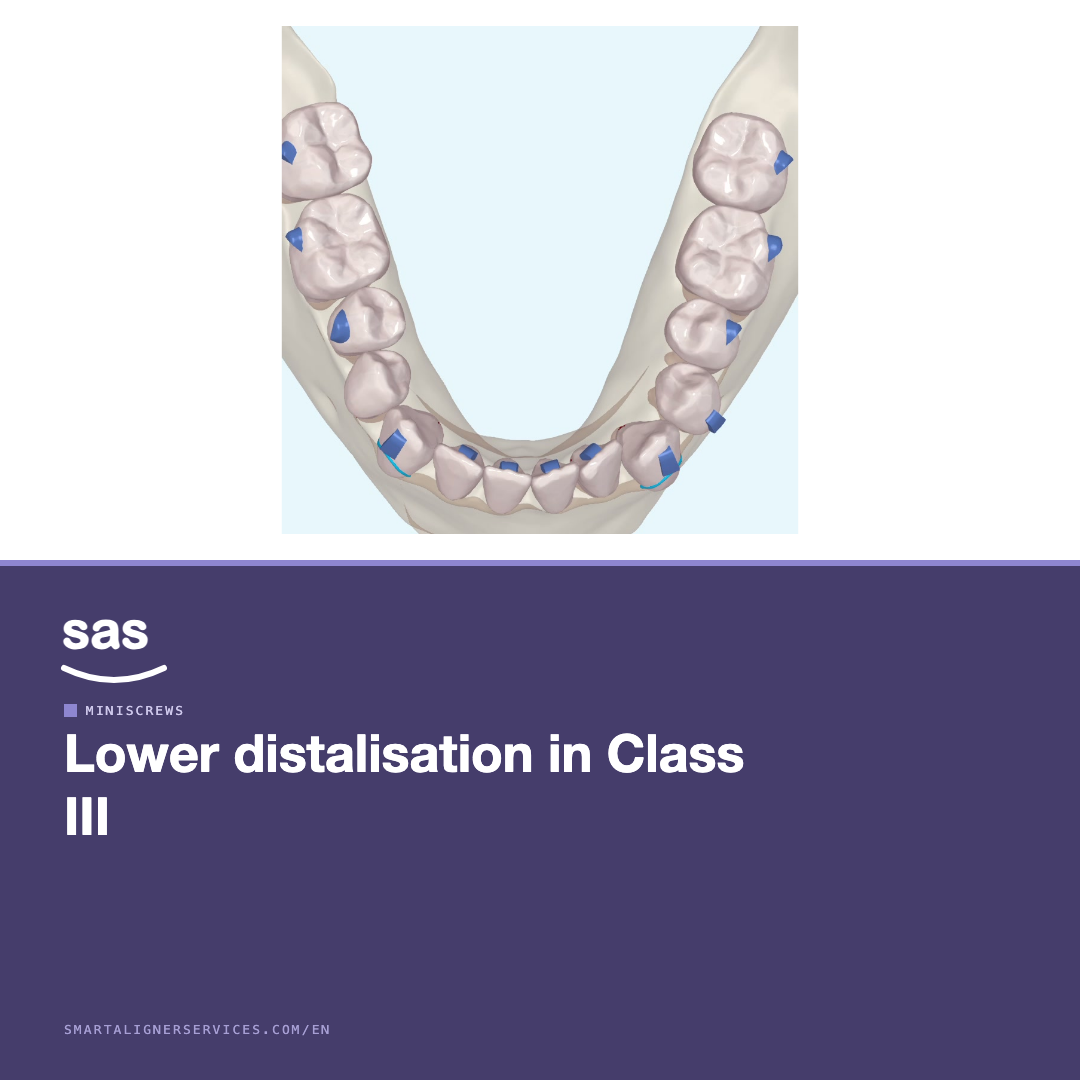
Lower distalisation with miniscrews in Class III

Molar intrusion with miniscrews to close an open bite
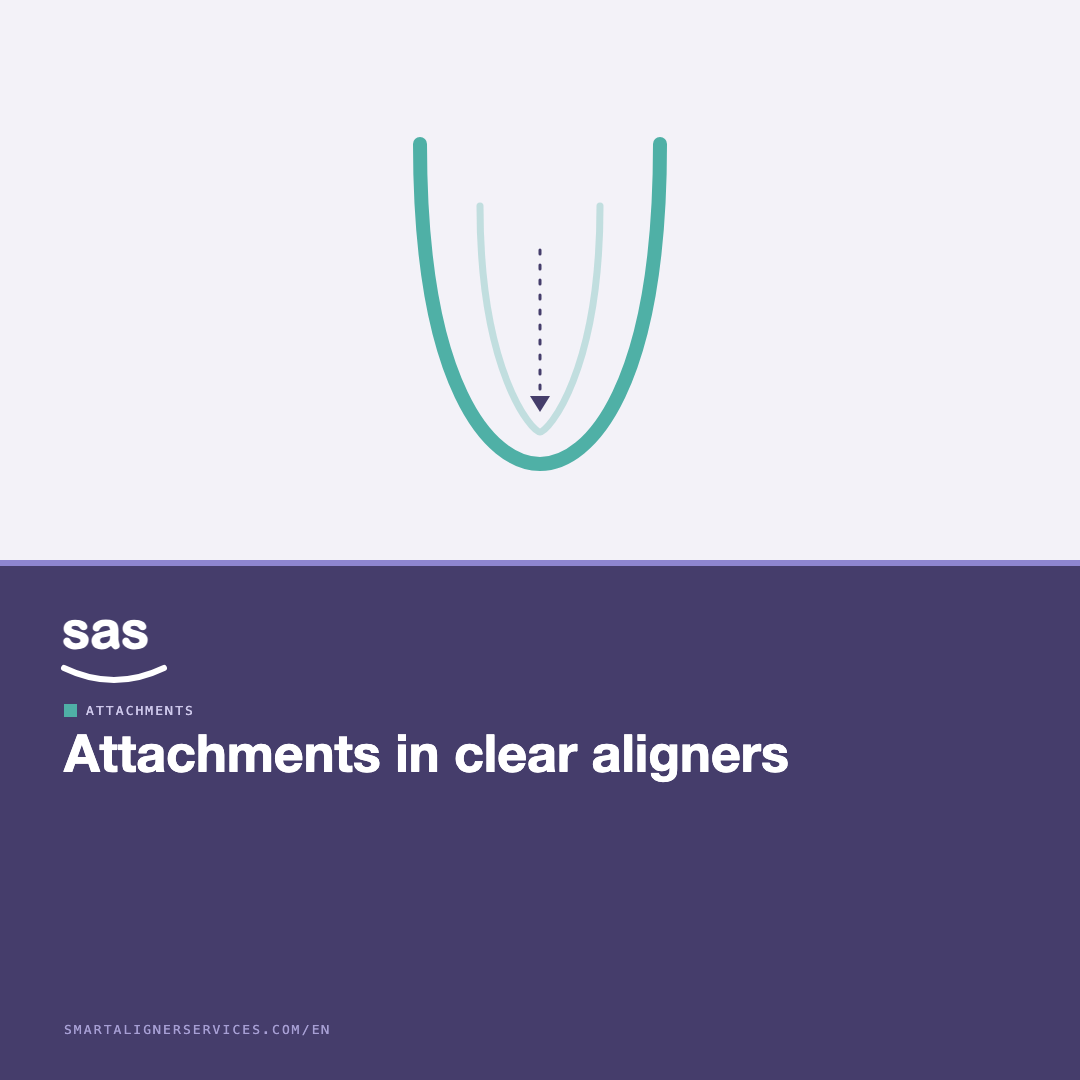
Attachments in clear aligners: what they do and which types matter


